
ID Card Security Features: UK Business Guide 2026

What are ID Card Security Features and Why Do They Matter?
ID card security features are the combination of visual, physical, and digital layers designed to protect your organisation, staff, and assets. Their primary purpose is to deter fraud, allow for the easy detection of tampering, and provide a means of instant identity verification. For UK businesses in 2026, a secure ID system is no longer a luxury but a fundamental component of workplace safety, data protection, and professional credibility.
Visual security is an important part of a layered staff ID system. It allows your team to quickly and confidently identify who belongs in a specific area and who doesn't. From a simple, professionally printed photo card to one incorporating more advanced elements, these features work together to create a secure and trusted environment.
As you plan your organisation's identification strategy, it's essential to understand the different levels of security available. This guide will walk you through the essential features, from foundational design principles to advanced digital technologies, helping you make an informed decision for your business.
The Role of Identity in Modern Workplace Safety
Professional ID cards are a cornerstone of a secure workplace culture. They foster a sense of accountability among staff and make it clear who is authorised to be on your premises. This has several key benefits:
- Helping Identify Unauthorised Access: While a card alone cannot physically stop someone, visible ID makes it much easier for your staff to spot and challenge individuals who may be "tailgating" – following authorised personnel into restricted areas without permission. A clear, visible ID policy empowers everyone to be part of the security solution.
- Building Trust: For clients, customers, and visitors, clearly identifiable staff members build immediate trust and confidence. It shows a commitment to professionalism and safety, reassuring them that they are in a secure and well-managed environment.
- Enhancing Accountability: When integrated with other systems, ID cards can provide a record of access and activity. This is particularly important in regulated industries or areas with sensitive information or valuable equipment.
Balancing Security with Budget and Brand
Not every organisation needs the same level of security. A small retail shop has different requirements from a large-scale data centre or a healthcare facility. The key is to find the right balance between robust security, your budget, and your brand identity.
- Identifying Your Needs: A simple, high-quality photo ID card is often sufficient for basic visual identification. Organisations handling sensitive data, valuable assets, or operating in high-risk environments may need to consider additional layers like QR codes or more advanced features.
- Branding as a Deterrent: A professionally designed ID card that incorporates your logo, brand colours, and a consistent layout is a security feature in itself. It is harder to fake convincingly than a generic, poorly designed card and signals that your organisation takes security seriously.
- The Importance of Consistency: A uniform design across all company ID cards is crucial. It allows your team to recognise official credentials at a glance and immediately spot anything that looks out of place.
Essential Visual Security Features for Staff ID Cards
While Imagin Products Ltd specialises in high-quality printing and design, it's useful for businesses to be aware of the advanced visual security features available in the market, which are often provided by specialist security-card providers. These features are designed to make cards difficult to alter or duplicate.
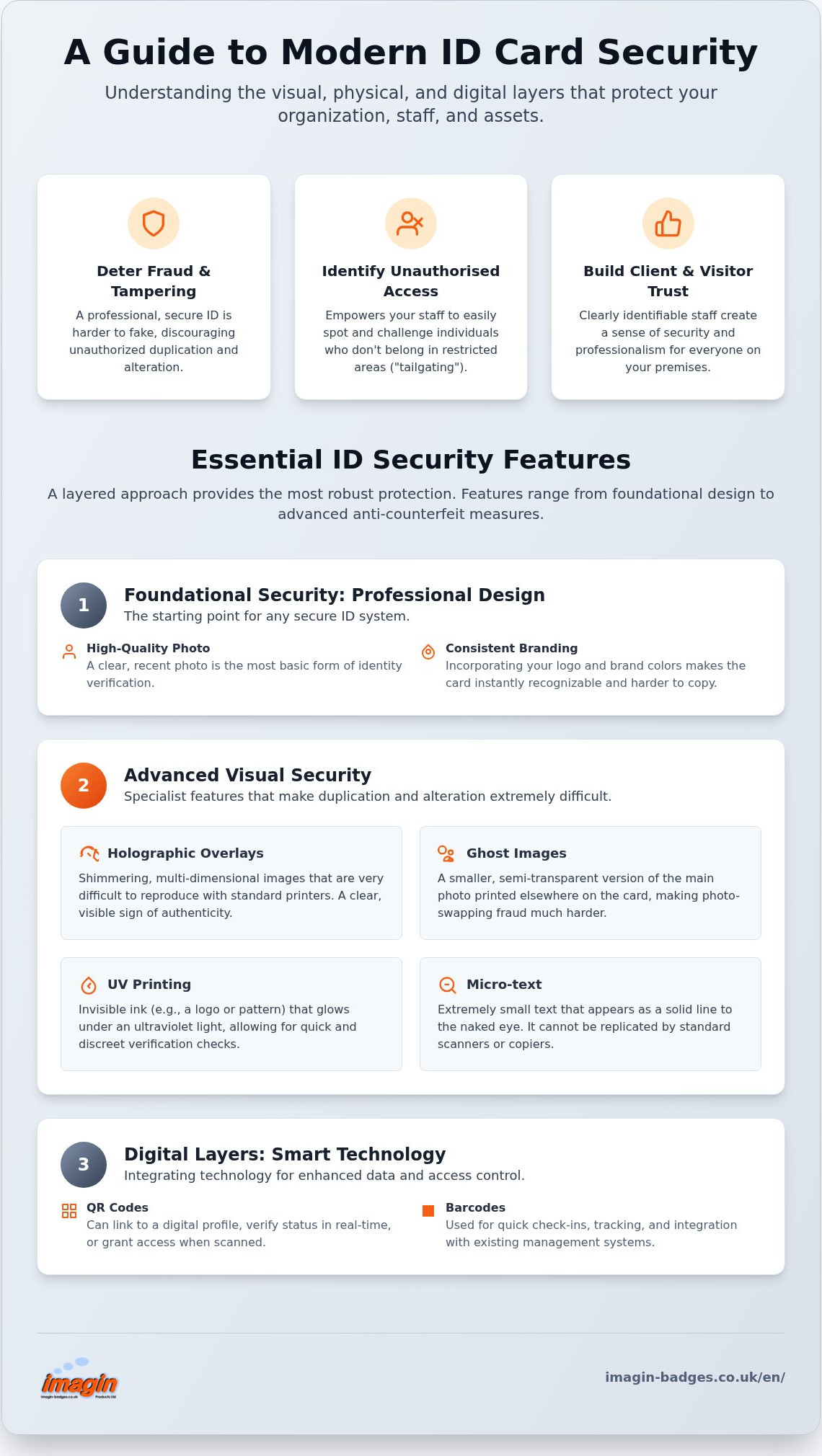
- Holographic Overlays: A shimmering, multi-dimensional image or pattern applied over the top of a card. This layer is difficult to reproduce convincingly using ordinary office printing or copying equipment.
- UV Printing: Ink that is invisible to the naked eye but fluoresces under an ultraviolet (UV) light. This allows for discreet and rapid verification checks with a simple UV torch.
- Micro-text: Extremely small text that appears as a solid line or design element to the naked eye. Under magnification, the text becomes clear, a detail that standard scanners and printers cannot replicate.
- Ghost Images: A smaller, semi-transparent (or "ghosted") version of the cardholder's main photograph printed elsewhere on the card. This makes it more difficult to alter convincingly by swapping the primary photo.
Holograms and Tamper-Proof Overlays
For organisations requiring a higher level of security, holographic and tamper-evident overlays offer significant protection. A standard laminate simply protects a card from physical wear, but these specialist overlays are designed to prevent fraudulent alteration.
- Visible Protection: The primary benefit of a hologram is its immediate, visible complexity. The way it catches and reflects light is a clear indicator of an authentic card.
- Data Integrity: Overlays physically protect the printed information—such as the name, photo, and expiry date—from being scratched, faded, or intentionally changed.
- Tamper Evidence: Many high-security overlays are "tamper-evident." If someone attempts to peel back the overlay to alter the card beneath, it may show visible damage or other signs of interference, depending on the product used. This provides an instant visual cue that the card's integrity has been compromised.
Advanced Printing Techniques: UV and Micro-text
Beyond holograms, specialist printers can incorporate other discreet features that add powerful layers of security without cluttering the card's design. These are particularly effective because they are not immediately obvious to a potential forger.
- Discreet UV Verification: UV ink can be used to print a company logo, a specific code, or a pattern that is only revealed under a UV light source. This is an excellent way for security personnel to quickly verify a card without needing complex equipment.
- Defeating Low-End Scanners: Micro-text is a simple but highly effective defence against casual counterfeiting. Most office-grade scanners lack the resolution to capture the fine detail, meaning any copy will have a blurry or solid line where the text should be.
- A Multi-Layered Approach: The most secure cards often combine several of these features. For example, a card might have a holographic overlay, a UV logo, and a line of micro-text. Each feature protects against a different type of fraud, creating a robust, multi-layered defence.
Digital Layers: QR Codes, Barcodes, and Smart Tech
A physical ID card can be enhanced with digital features that link it to a wider security ecosystem. While Imagin provides expertly printed cards with QR codes or barcodes, the integration of smart technologies like RFID or NFC typically involves working with specialist access-control providers.
- QR Codes: These scannable codes can link a physical card to a digital database, website, or profile for instant verification.
- Barcodes and Magnetic Stripes: Traditional and cost-effective methods still widely used for simple applications like library checkouts, time-and-attendance systems, and basic access control.
- RFID and NFC: Contactless "smart card" technologies that use radio waves to communicate with a reader for secure entry, internal payments, or equipment access.
- Data Protection: When storing or linking to personal data, it's crucial to ensure your system is compliant with UK data protection law. As the data controller, your organisation is responsible for protecting staff information. For more details, read our guide to GDPR compliance for staff ID cards.
The Rise of QR Codes in Modern ID Systems
QR codes have become an incredibly popular and versatile feature on modern ID cards. They are easy to generate and can be scanned by any standard smartphone, making them a flexible and low-cost way to add a digital layer to your physical cards.
- Real-Time Status Verification: A QR code can link to a secure online profile that shows a staff member's current status. A quick scan can confirm if they are an active employee, have completed recent training, or are authorised for a specific area. This can provide an additional real-time verification method when connected to a properly managed system.
- Visitor and Event Management: They are perfect for temporary passes for visitors, contractors, or event attendees. The QR code can be programmed to expire after a certain time, automatically revoking access without needing to retrieve the physical pass.
- Imagin can easily incorporate crisp, high-resolution QR codes into your photo ID card design, linking your physical credentials to your digital systems.
Contactless Technology: RFID vs. NFC
Radio-Frequency Identification (RFID) and Near Field Communication (NFC) are two related contactless technologies that are often used in secure access control systems.
- Understanding the Difference: In simple terms, NFC is a specialised, short-range form of RFID that operates over a few centimetres, making it ideal for "tap-and-go" applications like door entry or payments. Different RFID systems operate over different ranges, from short-range access cards to longer-range asset-tracking systems.
- Convenience and Security: The main benefit is convenience. Staff don't need to swipe a card; they can simply tap their card or wallet against a reader. The security of such a system depends on the specific credential, the authentication method, and the overall system design, not just the technology itself.
- System Integration: These technologies are designed to integrate with building access-control systems, creating a seamless experience. An ID card can be programmed to grant access to the main entrance, specific floors, and even IT resources, provided it is connected to an electronic access-control system that logs this data.
Security by Design: Using Layout and Colour to Prevent Fraud
Some of the most effective security features don't require advanced technology—they are built directly into the visual design of the card itself. At Imagin, our complimentary design service helps you leverage these principles to create an ID card that is both professional and inherently more secure.
- Colour Coding: Assigning specific colours or bands of colour to different personnel categories (e.g., permanent staff, contractors, visitors, security) for at-a-glance identification.
- Large, High-Resolution Photos: A clear, recent, high-quality photograph is a fundamental security feature. It is the primary tool for visual identity verification.
- Clear Expiry Dates: A prominently displayed expiry date is essential for preventing the use of old or revoked ID cards by former employees or contractors.
- Double-Sided Printing: Using both sides of the card allows you to separate public-facing information (photo, name, logo) from internal or less critical data (department, contact info, return instructions).
Implementing an Effective Colour-Coding System
A well-implemented colour-coding system is a simple yet powerful tool for enhancing workplace security. It allows anyone, from reception staff to security patrols, to instantly recognise who a person is and whether they belong in a particular area.
- Clear Categorisation: Use distinct colours to signify different personnel categories. For example, blue for general staff, yellow for contractors, and red for visitors. This simple system makes it easy to spot someone who is in an area where they shouldn't be.
- High Visibility: Ensure the colours are bold and easily distinguishable from a distance. A coloured border, a large colour block, or a colour-coded lanyard can all be effective.
- Assisting "At-a-Glance" Verification: The goal is to enable rapid visual checks. Your security team and staff shouldn't have to read the fine print on a card to know if someone is a visitor. The colour tells them instantly, streamlining the verification process.
The Importance of High-Quality Portraiture
A professional ID card system is undermined if the photographs are inconsistent, outdated, or of poor quality. The photo is the single most-referenced element for confirming a person's identity.
- Clarity is Key: A blurry, poorly lit, or pixelated photo makes it difficult to match the card to the person wearing it, defeating its primary purpose. This can create security vulnerabilities and looks unprofessional.
- Tips for Consistency: For best results, take all staff photos against a plain, neutral background using consistent lighting. Ensure the person is facing forward and their face is clearly visible. Establish a standard for all new employee photos to maintain quality over time.
- Updating Photographs: Photographs should be updated according to your organisation’s ID policy and whenever they no longer allow for reliable identification due to changes in appearance.
- A clear photo is essential, whether you opt for single-sided photo ID badges for simple visual checks or a double-sided design.
Implementing Your Secure ID System with Imagin
Creating a secure and professional ID card system doesn't have to be complicated. At Imagin, we simplify the process by combining our UK-based manufacturing expertise with dedicated creative support, helping you design and produce the perfect ID solution for your organisation.
- Complimentary Creative Assistance: Our in-house design team works with you to translate your security needs and brand guidelines into a polished, effective ID card design—at no extra cost.
- UK-Based Manufacturing: With over 30 years of experience producing high-quality identification products from our UK factory, we ensure strict quality control and offer rapid turnaround times.
- The Right Accessories: The effectiveness of an ID card also depends on how it's worn and protected. The right lanyards and holders not only protect the card but also ensure it remains visible at all times.
- Secure Your Workplace: A professional ID system is a critical investment in your organisation's safety and reputation. Let us help you create a solution that gives you peace of mind.
Customisation and Creative Support
We believe the design process should be a partnership. Our team is here to guide you through the options, helping you select the right features and layout to meet your specific security and branding goals.
- From Concept to Card: Whether you have a finished design or just a rough idea, we'll help you refine it. We can advise on photo placement, colour-coding, text layout, and QR code integration to ensure the final product is clear, professional, and secure.
- Quality That Lasts: Professional finishing is key to the longevity and integrity of an ID card. We use durable materials and high-resolution printing techniques to ensure your cards withstand daily use and continue to represent your brand to the highest standard.
- For senior staff or client-facing roles where a premium feel is important, consider complementing your ID system with our range of premium name badges.
Essential Accessories for Security and Wearability
Even a well-designed ID card is less effective if it is lost, damaged or not displayed when required. Choosing the right accessories is a crucial final step in implementing your ID system.
- Protect Your Investment: We offer a wide selection of ID card holders in both flexible and rigid materials to prevent cards from bending, cracking, or fading.
- Lanyards vs. Badge Reels: The choice often depends on the work environment. Lanyards keep the ID clearly visible and are great for most office settings, while badge reels are ideal for active roles or when a card needs to be tapped frequently on a reader. Discover which is right for you in our Lanyard vs Badge Reel guide.
- An Extra Layer of Branding: Custom-branded lanyards featuring your company logo or name add another layer of visual identification, reinforcing your corporate identity and making it even easier to spot authorised personnel.
Frequently Asked Questions (FAQs)
What is one of the most important security features for a standard staff ID card?
For visual identification, a high-resolution, recent photograph of the cardholder is one of the most important features. It is the primary method for confirming identity at a glance. This should be supported by a professional, consistent design that includes the person's name, role, and a clear company logo.
Can I add a hologram to my existing ID card design?
Adding features like holographic overlays typically requires specialist printing equipment and materials. While Imagin focuses on high-quality direct printing, we can advise on designing your card in a way that allows a specialist provider to add an overlay later. It's best to plan for such features from the start.
How do QR codes improve the security of photo ID cards?
A QR code adds a digital verification layer. When scanned, it can link to a secure online database or profile to provide real-time confirmation of the cardholder's status (e.g., active employee, certified first-aider). This helps verify that the card is not only authentic but also currently valid, offering more up-to-date information than the printed card alone.
Is it better to have single-sided or double-sided ID cards for security?
Neither is inherently more secure. Security depends on the card design, the verification process, and any supporting access-control system. Double-sided printing simply provides more space to organise information, allowing you to keep the front of the card clean and clear for essential identifiers (photo, name, logo) while placing secondary information on the back.
What are the UK requirements for healthcare staff ID security?
While there is no single national mandate, NHS trusts and private healthcare providers have strict internal policies. These typically require a clear photo, the holder's name and role, the organisation's name/logo, and often an expiry date. To help distinguish roles, teams, or visitor categories, some healthcare organisations use colour-coding systems as part of their design.
How often should we update or replace our staff ID cards?
Cards should be reviewed and replaced according to your organisation's security policy. Key triggers for replacement include following expiry arrangements, if the card is in poor physical condition, or if the photograph no longer provides a suitable likeness for reliable identification.
Does my business need RFID technology for basic identification?
For basic visual identification, no. A well-designed photo ID card is sufficient. RFID and other contactless technologies are primarily for integrating with electronic systems, such as building access control, time tracking, or cashless vending. They are a valuable addition if you need that functionality but are not essential for simple identity verification.
How can I ensure our ID card system is GDPR compliant?
To be compliant, you must have a lawful basis for processing the personal data on the card, collect only necessary information, store it securely, and have a clear policy on data retention. The organisation using the ID system is the data controller and remains responsible for complying with UK data protection law.