
How to Clean Embroidered Workwear: The 2026 Professional Care Guide

Your company logo is the handshake that happens before you even speak, but a frayed, puckered, or faded design sends a message of neglect rather than expertise. It's frustrating to invest in high-quality branded apparel only to see the threads pull or colours bleed after just a few cycles in the laundry. You aren't alone in wondering how to clean embroidered workwear without compromising the structural integrity of the design. Most professionals expect their uniforms to withstand the rigors of daily use, yet standard washing habits often lead to premature wear that ruins your professional image and forces expensive replacements.
We believe that workwear longevity is a partnership between premium manufacturing and informed post-purchase care. This 2026 guide provides the expert techniques you need to protect your investment and keep your team looking sharp. You'll learn the specific settings for washing and drying that prevent puckering, along with the professional secrets to maintaining vibrant thread colours for years. From temperature control to detergent selection, we're walking you through a complete maintenance routine that ensures your branded hoodies, polos, and jackets remain as impressive as the day they first arrived from our workshop.
Key Takeaways
- Understand how heat and friction impact different thread types to prevent your logo from losing its professional lustre.
- Master the essential "inside out" rule to discover exactly how to clean embroidered workwear while protecting the delicate thread surfaces from agitation.
- Learn why air drying is the gold standard for preventing the puckering and melting often caused by commercial tumble dryers.
- Discover safe spot-cleaning techniques that remove tough stains without using "logo-killing" chemicals like bleach or optical brighteners.
- See how choosing high stitch density and professional manufacturing standards from the start makes long-term maintenance significantly easier.
Understanding the Science of Embroidered Workwear Care
Embroidered workwear isn't just a garment with a logo; it's a precision-engineered composite. When you look closely at a professional polo or hoodie, you're seeing a multi-layered structure consisting of dense thread patterns anchored by a specialised backing material. Understanding this construction is the first step in learning how to clean embroidered workwear effectively. Unlike the base fabric, which is woven or knitted to move and stretch, embroidery is a rigid 3D structure that introduces its own set of mechanical stresses to the garment.
Various embroidery techniques dictate how these layers interact during a wash cycle. Most modern industrial embroidery uses high-sheen polyester or rayon threads. Polyester is the workhorse of the industry, prized for its colourfastness and resistance to industrial detergents. Rayon offers a superior, silk-like lustre but is more susceptible to damage from high heat and aggressive chemicals. Our goal is always to preserve the "tensile strength" and the original "sheen" of these threads so your branding remains sharp.
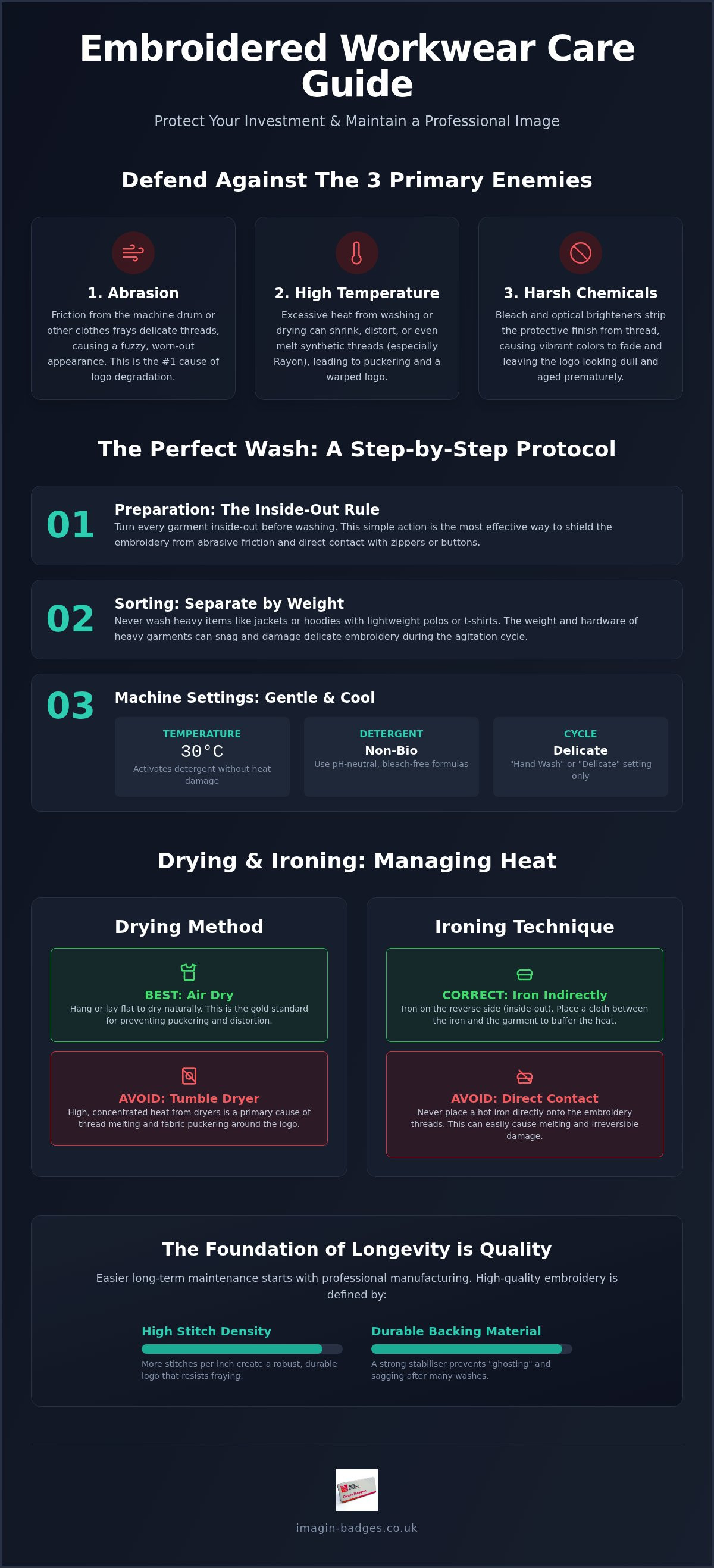
To keep your apparel looking its best, you must defend against three primary enemies:
- Abrasion: Physical friction from other clothes or the washing machine drum can fray individual thread fibres, leading to a fuzzy appearance.
- High Temperature: Excessive heat causes synthetic threads to lose their elasticity or even melt, resulting in a distorted logo.
- Harsh Chemicals: Strong bleaches and optical brighteners can strip the protective finish from the thread, leaving the logo looking dull and aged.
Embroidery vs. Print: Why Cleaning Methods Differ
While a screen-printed logo sits on the surface like a flexible skin, embroidery is physically stitched through the fabric. This creates a significant structural contrast. The garment fabric might shrink slightly when washed, but the dense, high-stitch-density logo remains rigid. This discrepancy is what causes "puckering," where the fabric gathers and wrinkles around the logo. We use specific washing methods to maintain the original tension of the stitches and prevent this distortion.
The Role of Backing Materials in Durability
Behind every crisp logo is an embroidery stabiliser. This backing material provides the necessary foundation during the manufacturing process and remains part of the garment's life. If this backing becomes saturated or damaged by improper washing, it can lead to "ghosting." This is where the logo appears to lose its defined edges or begins to sag. Keeping the backing intact and dry is essential for ensuring your branded apparel looks professional for its entire lifespan.
Step-by-Step: How to Wash Your Branded Uniforms
Before the machine even starts, the longevity of your branding is decided by your preparation. Learning how to clean embroidered workwear correctly starts with a quick inspection of every garment. Check for any loose threads or heavy staining that might need gentle pre-treatment. Once you're satisfied, turn the garment inside out. This simple step is the most effective way to shield your logo from the abrasive action of the washing machine drum. Friction is the primary cause of thread fraying; keeping the embroidery on the inside creates a protective barrier of fabric.
Sorting your laundry by weight is equally vital. Never wash heavy items like embroidered hoodies or hi-vis jackets alongside lighter t-shirts. Heavy zips and metal hardware can "chew" on delicate embroidery during the agitation cycle, causing snags that are impossible to repair. When you understand how to clean embroidered workwear, you protect the professional image of your entire team and ensure your investment lasts for years.
For the best results, stick to a 30°C temperature setting. This is the "sweet spot" for modern laundry, providing enough heat to activate detergents without risking the thermal shock that leads to thread shrinkage. Always choose non-biological, pH-neutral detergents. While these garments are built for the field, following professional Canadian Conservation Institute washing guidelines for delicate handling ensures the thread fibres remain intact and vibrant.
Machine Settings for Maximum Longevity
Modern washing machines offer "Delicate" or "Hand Wash" settings. We recommend using them for all branded apparel. These cycles feature lower agitation levels and shorter durations, which reduces the time thread fibres are exposed to water and mechanical stress. Avoid high-speed spin cycles. Intricate designs can become distorted if subjected to the intense centrifugal force of a 1400 RPM spin. A lower setting, such as 800 RPM, is much safer for maintaining the logo's shape.
Dealing with Colour Bleed Risks
High-contrast designs, like white text on a navy sweatshirt, carry a risk of colour bleed. Use "colour catcher" sheets in every wash to trap loose dyes before they settle into the lighter threads. Never leave wet embroidered garments in a pile or sitting in the machine. This is when dye transfer most commonly occurs. If you notice a bleed, re-wash the item immediately before it dries. Once the heat of a dryer or iron hits the fabric, that dye transfer becomes permanent.
Drying and Ironing: Managing Heat and Distortion
While the wash cycle removes dirt, the drying process is where most structural damage to branding occurs. High heat is the primary enemy of precision stitching. Most professional embroidery uses synthetic polyester or rayon threads; these materials have different melting points and shrinkage rates compared to the cotton or poly-cotton blends of the garment itself. Adopting the principles of textile care and preservation used by professional conservators can significantly extend the life of your branded apparel. The golden rule is simple: avoid the tumble dryer at all costs. The intense, circulating heat causes the garment fabric to contract while the rigid embroidery remains the same size, resulting in permanent puckering that no amount of ironing can fix.
Mastering how to clean embroidered workwear requires a commitment to air drying. When you remove items from the wash, don't leave them crumpled in a basket. Instead, give each garment a gentle shake to settle the fibres. For lighter items like t-shirts or thin polos, use a wide, padded hanger to prevent "shoulder bumps." For heavier items such as embroidered sweatshirts and hoodies, flat-drying is the superior choice. Laying these garments on a clean towel prevents the weight of the wet fabric from stretching the logo or distorting the neckline. This patient approach ensures the "tensile strength" of the embroidery stays intact.
Safe Ironing Techniques for Logos
You should never apply a hot iron directly to an embroidered surface. Direct contact can scorch synthetic threads, causing them to lose their professional lustre or even melt into the fabric. If you must remove wrinkles, iron the garment on the reverse side. For the best results, place a thin, clean pressing cloth between the iron and the fabric. Use a "Steam Only" approach by hovering the iron slightly above the logo; the moisture helps relax any minor puckering without the risk of heat damage. This keeps the design crisp and the colours vibrant.
Restoring Shape After a Wash
If you notice the fabric gathering around the logo after cleaning, you can often restore the shape while the garment is still slightly damp. Gently stretch the fabric away from the centre of the embroidery in all directions. Once the item is fully dry, you can use a soft-bristled garment brush to lightly "brush" the embroidery. This simple action aligns the threads and restores the original sheen that makes your branding stand out. Store your uniforms in a cool, dry place on proper hangers to maintain their professional silhouette between shifts.
Stain Removal for Heavy-Duty Workwear
Heavy-duty work environments involve more than just sweat and dust. Tradespeople often face grease, oil, and thick mud that require a more aggressive approach than a standard laundry cycle. Knowing how to clean embroidered workwear when it's heavily soiled is a different challenge. You must balance the need for deep cleaning with the fragility of the thread. Avoid bleach and optical brighteners at all costs. These are "logo killers" that strip the protective coating from synthetic threads, causing them to fray and lose their professional lustre almost immediately.
For common trade stains like grease or ink, reach for mild dish soap or white vinegar. These natural alternatives break down oils without damaging the delicate embroidery structure or the garment's backing. When dealing with hi-vis safety gear, you must be doubly careful. Aggressive scrubbing can degrade the reflective tape and the high-visibility stitching, which could compromise the safety rating of the garment. Let mud dry completely before brushing it off gently with a soft-bristled brush. This prevents the dirt from being ground into the thread fibres.
Treating the Fabric, Not the Thread
The secret to effective stain removal is isolation. You should apply your chosen cleaning agent to the surrounding fabric while avoiding the logo itself as much as possible. Use the "Dab, Don’t Rub" technique. Rubbing pushes the stain deeper into the embroidery backing and can cause unsightly snagging. Always test any new cleaning agent on an inconspicuous area, like an inside hem, before applying it near your branding. This ensures the chemical won't cause the garment dye to bleed into your white or light-coloured embroidery threads.
When to Use Professional Laundry Services
Some items, like technical softshell jackets or heavy wool-blend fleeces, might be labelled as "Dry Clean Only." In these cases, it's best to use a professional service rather than risking a home wash. When handing over your gear, clearly communicate the specific care needs for the embroidery. Ensure the industrial cleaner understands that excessive heat or harsh solvents will ruin your branding. If you need a fresh set of durable uniforms that can withstand the rigours of your trade, explore our range of premium embroidered workwear today. Maintaining a professional image starts with quality manufacturing, but it's sustained through these careful maintenance steps.
Maximising ROI Through High-Quality Embroidery
Professional care is only half the battle for uniform longevity. The long-term ROI of your branded apparel depends heavily on the quality of the initial stitch. High stitch density isn't just about achieving a premium, textured look; it's a structural necessity. When a logo is built with a high number of "locked" stitches, it becomes significantly more resistant to unravelling during the agitation of a wash cycle. This manufacturing precision is why some garments look ragged after three months while others remain pristine for years. If you're constantly worrying about how to clean embroidered workwear without it falling apart, the issue often lies in the production quality rather than your laundry habits.
Thread selection plays a vital role in how your branding ages. We prioritise premium polyester threads because they are inherently more fade-resistant than budget rayon alternatives. These industrial-grade fibres are designed to withstand the chemicals in standard detergents and the UV exposure common in outdoor trade work. For businesses looking to simplify their branding and protect their garments, using custom name badges can reduce the amount of intricate text needed in the embroidery. This strategy minimises the risk of fine lettering snagging and keeps your main company logo as the clear focal point.
Selecting Durable Fabrics for Your Brand
The garment fabric acts as the structural foundation for every stitch. Poly-cotton blends are often the superior choice for embroidered items. They offer much more stability than 100% cotton, which tends to shrink at different rates than the thread, causing the puckering mentioned in earlier sections. Pay close attention to the garment weight, measured in GSM (grams per square metre). A higher GSM provides a denser canvas that supports heavy embroidery without sagging or "ghosting." Choosing fade-resistant colours for your base garments also helps maintain a professional image through high-frequency washing cycles.
The Imagin Products Ltd Commitment to Quality
At our UK-based facility, we take pride in a design-first approach that ensures every logo is "wash-ready" before production begins. We don't just digitise a file; we optimise the stitch path for the specific garment and thread type to ensure maximum longevity. This commitment to local quality standards means your team stays looking sharp regardless of the UK weather or the rigours of the job. It's about moving from a transactional purchase to a reliable partnership where the craftsmanship supports your daily operations. Explore our range of durable embroidered workwear to see how premium manufacturing makes learning how to clean embroidered workwear a much simpler task.
Protecting Your Professional Image for the Long Term
Maintaining a sharp brand image requires a careful balance between professional manufacturing and diligent post-purchase care. By washing garments inside out at 30°C and strictly avoiding the tumble dryer, you prevent the mechanical stress and heat damage that typically ruins a logo. Mastering how to clean embroidered workwear ensures that your team looks as professional in month twelve as they did on day one. This proactive approach protects the vibrancy of the threads and the structural integrity of the fabric so you don't have to face the cost of frequent replacements. It’s about more than just laundry; it’s about preserving the identity of your business through every shift.
Since 1990, UK businesses have trusted us to deliver branding that stands the test of time. We manufacture everything in our own UK factory for total quality control, using high-density embroidery techniques specifically designed for maximum wash-durability. This foundation of craftsmanship ensures that your uniforms can handle the rigours of daily use without losing their lustre. Your uniforms are a vital investment in your company's reputation; treating them with the expert care they deserve will ensure they serve your team well for years to come. We’re here to help you translate your digital vision into physical objects that last.
Browse Our Durable Embroidered Workwear Collection
Frequently Asked Questions
Can I tumble dry embroidered polo shirts?
No, you should avoid tumble drying whenever possible to protect the structural integrity of the design. The high heat in a dryer causes synthetic embroidery threads to contract at a different rate than the garment fabric, which leads to permanent distortion and puckering. Air drying is the safest method for preserving the flat, professional appearance of your logo. If you must use a dryer, select the lowest heat setting and remove the item while it's still damp.
Why is my embroidered logo puckering after washing?
Puckering usually happens because the garment fabric has shrunk while the rigid embroidery stitches have remained the same size. This often occurs when washing at high temperatures or using high-speed spin cycles that put mechanical stress on the threads. To fix minor puckering, you can gently stretch the fabric around the logo while it's damp and then air dry it flat. Choosing poly-cotton blends from the start helps minimise this effect as they're more stable.
Is it better to wash workwear in biological or non-biological detergent?
Non-biological, pH-neutral detergents are the best choice for protecting embroidered designs. Biological detergents contain enzymes that are effective at breaking down organic stains but can also be too aggressive for the delicate protective coatings on high-sheen threads. Using a milder, non-bio solution ensures the embroidery maintains its original lustre and tensile strength over hundreds of wash cycles, which is a key part of how to clean embroidered workwear professionally.
How do I stop the colours from my embroidery bleeding?
Prevent colour bleed by using colour catcher sheets in every wash and never leaving wet garments in a pile. Thread dye is most likely to transfer when items are left damp and touching other fabrics for extended periods. If you have high-contrast designs, such as red embroidery on a white shirt, always wash in cool water. If a bleed occurs, re-wash the item immediately before the dye has a chance to set.
Can I iron over an embroidered company logo?
You should never apply a hot iron directly to the face of an embroidered logo. The heat can melt synthetic polyester threads or cause them to lose their professional sheen. Instead, turn the garment inside out and iron on the reverse side. If you need to iron from the front, use a clean pressing cloth as a heat barrier and rely on a steam only approach to relax any wrinkles safely.
What is the best temperature to wash branded workwear?
A temperature of 30°C is the ideal setting for most branded apparel. This provides enough thermal energy to activate modern detergents and remove daily grime without risking the shrinkage that leads to puckering. Washing at 30°C also helps preserve the vibrant colours of your threads for much longer. For heavily soiled trade gear, you might occasionally use 40°C, but 30°C remains the gold standard for long-term logo preservation and thread integrity.
How do I remove grease stains from an embroidered hoodie?
To remove grease from an embroidered hoodie, apply a small amount of mild dish soap directly to the stain and let it sit for ten minutes. Avoid rubbing the area vigorously, as this can fray the embroidery threads or damage the backing material. Instead, gently dab the fabric with a soft cloth. This targeted approach is a key part of how to clean embroidered workwear without compromising the high-density stitches that keep your branding looking sharp.
Should I use fabric softener on my embroidered uniforms?
It's best to avoid fabric softeners when washing embroidered uniforms. These products leave a waxy coating on fibres that can dull the reflective sheen of embroidery threads over time. This buildup can also weaken the bond between the thread and the stabilising backing, leading to a softer, less crisp logo. For the best results, stick to a high-quality detergent and skip the additives to keep your branding looking as sharp and professional as possible.