Embroidery on Waterproof Jackets: Professional Branding

Can You Embroider Waterproof Jackets? The Short Answer
Yes, you absolutely can embroider waterproof jackets, but it’s a process that requires a specific technical approach to get right. The central question isn't just "can it be done?" but rather "is embroidery suitable for waterproof jackets if you want them to stay waterproof?"
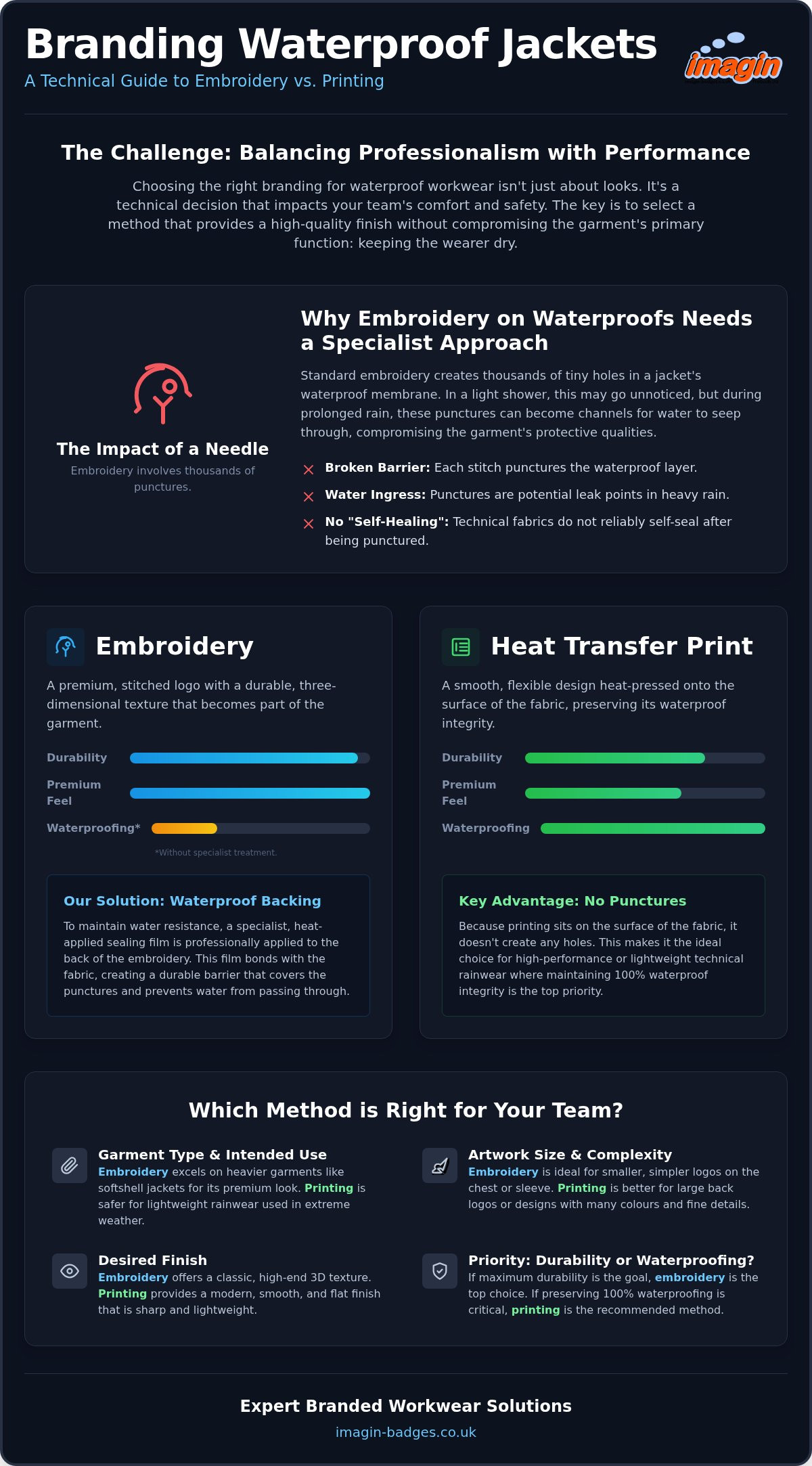
Here’s the reality: embroidery involves a needle passing through the fabric thousands of times to create your logo. Each stitch creates a tiny puncture. While the thread itself fills most of the hole, these punctures can become points where water might seep through, especially during a persistent British downpour. The suitability of embroidery ultimately depends on the jacket's construction, the type of waterproof technology it uses, and how your team will be using it.
The Aesthetic Advantage of Embroidery on Outerwear
For many businesses, embroidery is the go-to choice for branding workwear, and for good reason. On garments like softshell jackets and fleece-lined parkas, a stitched logo has a premium, three-dimensional texture that looks professional and feels high-quality. Unlike some prints, embroidery is exceptionally durable, standing up well to the scuffs, scrapes, and frequent washing that workwear often endures. It becomes part of the garment itself, conveying a sense of permanence and quality for your brand.
When to Reconsider Embroidery for Rainwear
However, embroidery isn't always the best choice. For high-performance or lightweight technical rainwear, any puncture can compromise the garment's primary function. If your team works in extreme weather where staying dry is a critical safety issue, a different branding method might be more appropriate. The size of your logo also matters; a large, dense design on the back of a jacket creates significantly more potential points for water to enter than a small, simple logo on the chest. It's also important to consider the jacket's "Hydrostatic Head" rating, a measure of how waterproof it is. For jackets with very high ratings, preserving the integrity of the fabric is key.
Understanding the Impact of Needle Punctures on Waterproofing
When you choose to embroider a waterproof jacket, it’s helpful to understand what’s happening to the fabric. Every single stitch creates a small break in the waterproof membrane or coating that is designed to keep water out. In light showers, this might not be noticeable, but in heavy, driving rain, these tiny holes can allow moisture to pass through.
The stitching and thread can create potential routes for water penetration. This is why a logo might feel perfectly dry after a brief drizzle but could show signs of dampness on the inside after a full day working in the rain. It’s also important to distinguish between water-resistant fabrics, which often have a Durable Water Repellent (DWR) coating, and fully waterproof garments, which feature a membrane. Puncturing a membrane has more significant consequences for performance.
The Effect of Prolonged Rain and Water Pressure
During a light shower, water beads up and rolls off the surface of most waterproof jackets. However, during a prolonged downpour, the constant impact of raindrops creates pressure. This pressure can increase the likelihood of water finding its way through the unsealed stitch holes of an embroidered logo. The inner lining of a jacket can sometimes manage small amounts of moisture, but it can be overwhelmed if water ingress is persistent. This is also why logo placement is so important; a logo on the chest is generally less exposed to direct, heavy rain than one placed on the top of theshoulders or the hood.
Fabric Memory and Self-Healing Myths
There's a common misconception that modern technical fabrics will "self-heal" or close up around the threads after being embroidered. While some tightly woven fabrics might appear to do so, a puncture in a waterproof membrane is a permanent opening. Synthetic fibres like polyester and nylon, which are common in outerwear, do not reliably self-seal once punctured by an embroidery needle. Similarly, while professional embroiderers use high-quality polyester threads with very low moisture absorption, the thread itself cannot create a waterproof seal in the holes it passes through. They are a crucial part of a durable, professional finish, but not a complete solution to water ingress.
How to Maintain Water Resistance with Embroidered Logos
So, if embroidery creates holes, how do professional suppliers brand waterproof jackets effectively? The answer lies in specialist techniques and strategic planning. At Imagin Products, we use a combination of methods to reduce water ingress and protect the performance of your branded outerwear.
- Using a Waterproof Backing: After the logo is stitched, a specialist, heat-applied waterproof sealing film can be applied to the back of the embroidery. This acts as a barrier, covering the punctures and preventing water from passing through to the inside of the jacket.
- Smart Logo Placement: We advise on the best position for your logo. Avoiding areas of high water exposure, like the direct top of the shoulders, and placing the logo on the chest or sleeve can make a significant difference.
- Selecting the Right Thread: We use high-quality polyester threads. Unlike cotton, polyester has very low moisture absorption, which means it won't act like a wick, pulling water through the fabric. It's also strong, durable, and holds its colour well.
- Choosing the Right Garment: The process starts with selecting a jacket that is well-suited for embroidery in the first place. We can help you choose garments where the fabric and construction work well with stitching.
The Role of Waterproof Backing and Sealants
Applying a specialist heat-applied waterproof sealing film or backing is an important method for reducing water ingress through embroidery punctures. This flexible film is cut to size and professionally heat-pressed over the reverse side of the stitching. It bonds with the fabric, creating a durable seal that covers the entire area. This professional process is far more effective and durable than DIY waterproofing sprays, which typically wear off quickly and are not designed to seal physical punctures in a membrane.
Smart Logo Positioning for Outdoor Teams
Where you place your logo has a real impact on waterproof performance. The left chest is a very common branding position, partly because it's a relatively low-impact area for rain. However, its suitability always depends on the jacket's specific design, including the location of seams and pockets. It’s crucial to avoid embroidering over a jacket's existing taped seams. These seams are sealed at the factory to prevent leaks, and stitching through them can compromise their waterproof integrity. A clever alternative can be to embroider on a pocket flap or a storm flap, which keeps the main body of the jacket completely intact.
Embroidery vs. Heat Transfer Printing for Waterproofs
Embroidery isn't your only option. Heat transfer printing, where a design is applied to the surface of the fabric using heat and pressure, is an excellent alternative for many waterproof garments. It bonds with the outer layer without creating any punctures, leaving the waterproof membrane untouched. But how does it stack up against the traditional quality of embroidery?
- Waterproof Integrity: Heat transfer has a clear advantage here, as it doesn't break the surface of the fabric.
- Appearance: A high-quality heat transfer can produce crisp, sharp, multi-coloured designs that look fantastic. Embroidery offers a textured, classic, and premium feel that many brands prefer.
- Durability: Modern heat transfers are very durable, but on fabrics that flex and stretch a lot, they can be susceptible to peeling or cracking over many years of hard use and washing. Embroidery is exceptionally robust and often outlasts the garment itself.
- Fabric Suitability: Crucially, some waterproof coatings and technical fabrics can be sensitive to the heat and pressure required for heat transfer application. It’s essential to check the garment manufacturer's decoration guidelines.
When Heat Transfer is the Superior Choice
For certain types of outerwear, heat transfer is often the better, safer choice. This is particularly true for:
- Lightweight 'Pack-a-Macs': On very thin rain shells, embroidery can pucker the fabric and its weight can feel unbalanced. A lightweight transfer is much more suitable.
- Complex, Colourful Logos: If your logo has gradients or many fine details and colours, a heat transfer can replicate it perfectly, whereas embroidery would require a very high (and heavy) stitch count.
- Prioritising Waterproofing Above All: For roles where staying 100% dry is a non-negotiable safety requirement (e.g., some offshore or railway work), a puncture-free branding method like heat transfer may be preferable.
When Embroidery Wins on Performance
Despite the advantages of print, embroidery remains the undisputed winner for certain garments and applications:
- Heavy-Duty Jackets: On thicker garments like embroidered softshell jackets and insulated winter parkas, embroidery integrates beautifully with the fabric.
- High-Abrasion Environments: If the jackets will be subject to a lot of rubbing or industrial laundering, the sheer durability of stitching is a major advantage.
- A Traditional, Authoritative Look: For many organisations, the classic, high-end appearance of embroidery is central to their brand identity, especially for management or client-facing teams.
Choosing the Right Branded Waterproofs for Your Team
Making the right decision starts with a conversation about your specific needs. What environment will your team be working in? What kind of look are you trying to achieve? And what is the specification of the jacket you have in mind? As a UK workwear specialist with over 30 years of experience, we're here to guide you through those questions.
We believe in testing first. Before a full production run, we assess how a chosen fabric reacts to the embroidery process to ensure the final result will meet our high standards. This is a key part of our service, based right here in our Kirkcaldy factory. We'll give you honest advice on whether embroidery, printing, or even a combination of methods is the best fit for your gear.
Softshell Jackets: The All-Rounder for Embroidery
Softshell jackets are often a perfect middle ground. Their dense, slightly stretchy fabric provides a stable and smooth base that supports high-quality, detailed stitching. It’s important to note that many softshells are highly water-resistant rather than fully waterproof, meaning they are designed to handle showers and wind but not a torrential storm. This often makes them an ideal candidate for embroidery, as the slight compromise in water resistance from the stitching is less critical than on a high-spec storm shell. You can browse our collection of jackets in our professional outerwear range.
The Imagin Products Approach to Quality Workwear
Our goal is to be your trusted branding partner. From our base in Kirkcaldy, we provide an end-to-end service that focuses on quality and practical advice. Our in-house design team offers complimentary assistance to ensure your logo is digitised perfectly for embroidery, optimising the stitch pattern for clarity and durability. When you're ready to order your next set of branded waterproof jackets, we'll help you consider every angle to ensure your team looks professional and stays protected.
Ready to get started? Explore our range of professional embroidered workwear and see what we can do for your team.
Frequently Asked Questions
Does embroidering a jacket void its waterproof warranty?
It can. Many manufacturers of high-performance technical gear (like those using GORE-TEX membranes) state that any unauthorised alteration, including embroidery, can void their waterproof guarantee. If retaining a specific manufacturer's warranty or certification is critical, it's essential to check their guidance before proceeding.
Can you seal the holes made by the embroidery needle?
Yes, as a professional workwear provider, we can apply a specialist waterproof backing or heat-sealed film to the reverse of the embroidery. This creates a barrier that significantly reduces the chance of water getting through the stitch holes.
Is printing better than embroidery for raincoats?
For thin, lightweight raincoats, heat transfer printing is generally a better choice because it doesn't puncture the fabric. Embroidery is often better suited to thicker, more robust garments like softshell and fleece-lined jackets, where fabric stability and durability are key.
What is the best place to put a logo on a waterproof jacket?
The left or right chest is the most common and often one of the most practical locations. It's a lower-exposure area compared to the shoulders or back, which bear the brunt of heavy rain. For expert advice on your specific garment, see our guide to logo placement.
Will the embroidery thread fade or shrink on outdoor gear?
No. We use high-quality, industrial-grade polyester threads that are specifically designed for workwear. They are resistant to UV fading and are colourfast, ensuring your logo remains sharp and professional even after exposure to the elements.
How should I wash an embroidered waterproof jacket?
Always follow the garment’s specific care label first, as instructions vary. Generally, it's best to wash technical outerwear on a gentle cycle, often at a low temperature like 30°C. Use a specialised technical wash designed for waterproof clothing rather than standard detergents, and never use fabric softener as it can clog the pores of a breathable membrane. Where the manufacturer's instructions allow, a gentle tumble dry on low heat can sometimes help to reactivate the DWR coating.