
What is the Difference Between Class 1, 2, and 3 Hi-Vis? UK Safety Guide 2026

Understanding EN ISO 20471: The Foundation of UK Hi-Vis Standards
Navigating the world of Personal Protective Equipment (PPE) can feel complex, especially when the safety of your team is on the line. At the heart of high-visibility workwear in the UK is a single, crucial standard: EN ISO 20471. Understanding this standard is the first step to making informed, compliant decisions for your business.
EN ISO 20471 is the international standard for high-visibility clothing, fully adopted in the UK to ensure workers are sufficiently visible in hazardous environments. It replaced the older EN471 standard, introducing more stringent requirements for design and performance. In essence, EN ISO 20471 is the legal benchmark for visibility in the UK workplace, and compliance is a key part of your responsibility as an employer under the Health and Safety Executive (HSE) guidelines.
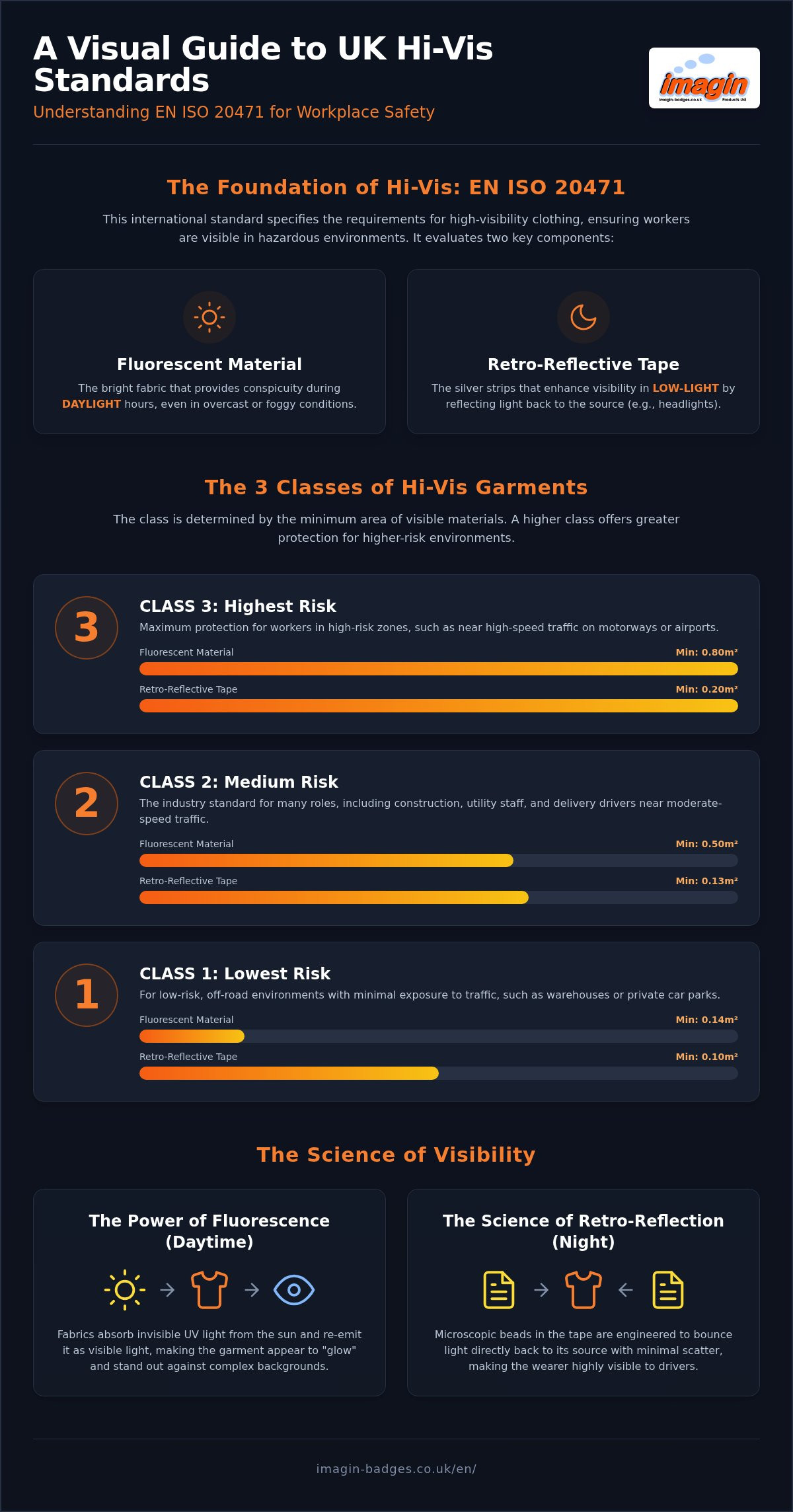
The standard evaluates two primary components of any hi-vis garment:
- The Fluorescent Background Material: This is the brightly coloured fabric that makes up the bulk of the garment. Its job is to make the wearer conspicuous during daylight hours.
- The Retro-Reflective Tape: These are the silver, reflective strips or bands on the garment. Their purpose is to enhance visibility in low-light conditions by reflecting light from a source, like vehicle headlights, directly back to that source.
The performance of these materials, and the total area they cover on the garment, determines which of the three safety classes the item falls into. This classification system is not arbitrary; it’s a precise calculation designed to match the level of protection to the level of risk.
Why Background Material Matters
The vibrant colour of hi-vis clothing is its first line of defence. Fluorescent colours, such as yellow and orange-red, are exceptionally effective because they react with the sun's ultraviolet (UV) light. They absorb UV rays and re-emit them as visible light, making the garment appear to "glow" and providing outstanding conspicuity, even in overcast or foggy daytime conditions.
This effect ensures the wearer stands out against complex backgrounds, whether it’s the visual noise of a busy urban construction site or the natural tones of a rural setting. The standard also specifies requirements for colour fastness, which is the material's ability to retain its original colour after exposure to light, washing, and abrasion. A garment that fades loses its fluorescent properties and, consequently, its safety rating.
The Science of Retro-Reflective Tape
While fluorescent material is key for daytime visibility, retro-reflective tape is essential for safety at night or in low-light conditions. Unlike a simple mirror that reflects light at an opposing angle, retro-reflective material is engineered to bounce light directly back to its point of origin with minimal scattering.
This is why a person wearing a compliant hi-vis jacket seems to light up brilliantly in a car's headlights. The placement of this tape is also strictly regulated by EN ISO 20471. It must be positioned to outline the human form, with horizontal bands on the torso, sleeves, and legs. This helps drivers instantly recognise the shape as a person, allowing for faster reaction times. Advanced tapes often use microscopic glass bead technology to achieve the highest levels of reflectivity, ensuring maximum performance when it's needed most.
Breaking Down the Difference Between Class 1, 2, and 3 Hi-Vis
The core difference between Class 1, 2, and 3 hi-vis is the minimum required surface area of both the fluorescent background material and the retro-reflective tape. A higher class means more visible material, offering a greater level of conspicuity and safety. Choosing the correct class depends entirely on the working environment and the associated risks, which should be determined by a thorough risk assessment.
| Class | Fluorescent Background Material | Retro-Reflective Material | Typical Use Case |
|---|---|---|---|
| Class 1 | Minimum 0.14m² | Minimum 0.10m² | Low-risk, off-road environments like warehouses or car parks. |
| Class 2 | Minimum 0.50m² | Minimum 0.13m² | Medium-risk environments, such as construction sites and delivery services. |
| Class 3 | Minimum 0.80m² | Minimum 0.20m² | High-risk environments requiring the highest level of visibility. |
Class 1: Low-Risk and Off-Road Safety
Class 1 offers the lowest level of visibility under the EN ISO 20471 standard. These garments are suitable for environments where interaction with moving vehicles and other visibility risks are low, subject to a suitable risk assessment. You will typically see Class 1 garments worn by staff in private warehouses, car park attendants, or workers on sites far removed from any traffic.
Common examples include simple hi-vis waistcoats with minimal reflective tape or hi-vis trousers worn on their own. While perfectly adequate for their intended purpose, Class 1 is almost always insufficient for any work taking place on or near public roads in the UK.
Class 2: The Industry Standard for Versatility
Class 2 represents a significant step up in visibility and is the most widely used category across UK industries. It provides a good level of conspicuity for workers who are near traffic or moving machinery. It is a common requirement for construction workers, utility staff, and delivery drivers who need to be seen but are not working in high-speed traffic zones.
Garments such as hi-vis polo shirts, standard waistcoats, and bodywarmers often fall into this class. Class 2 strikes a crucial balance, offering the visibility needed to meet HSE requirements for many roles while providing greater comfort and flexibility than the more substantial Class 3 garments.
Class 3: Maximum Protection for High-Speed Zones
Class 3 provides the highest level of visibility and is designed for workers in the most hazardous, high-risk environments. To achieve Class 3 certification, a garment must cover the torso and have sleeves with reflective bands, ensuring the wearer's full human form is outlined and visible from all angles.
This class includes items like hi-vis bomber jackets, full-length coats, and coveralls. Class 3 may be required where a risk assessment or sector-specific requirements identify the need for the highest level of conspicuity. This often includes work on motorways, dual carriageways, airports, or any environment where workers are exposed to fast-moving traffic or operate in poor weather and low-light conditions.
UK Road and Rail Requirements: When Specific Standards Apply
While EN ISO 20471 provides the foundational classes, certain UK sectors have additional, specific regulations that dictate the type of hi-vis workwear required. For anyone working on UK roads or railways, these sector-specific standards are critical for ensuring legal compliance and worker safety.
For road workers, the key document is the Chapter 8 of the Traffic Signs Manual. This provides guidance for those setting up road works and temporary situations. While it doesn't set universal speed thresholds for each hi-vis class, it outlines best practices and principles for ensuring workers are adequately visible to road users. A site's risk assessment will use this guidance to determine the appropriate class of PPE.
The principle of "all-round" visibility is paramount, meaning a worker must be seen from every angle. This is why supervisors and those working in the most exposed positions are often required to wear the highest class of hi-vis available for the task.
RIS-3279-TOM: The Railway Group Standard
The UK rail network has its own unique set of visibility challenges and, therefore, its own standard: RIS-3279-TOM (formerly GO/RT 3279). This standard is essential for anyone working on or near the trackside.
The most notable requirement of this standard is the colour. RIS-3279-TOM specifies fluorescent orange requirements for high-visibility clothing within the scope of the standard. This ensures that rail workers are clearly visible and distinct within the unique visual environment of the railway. Consequently, garments within the scope of RIS-3279-TOM must meet its specified fluorescent orange requirements. It’s also important to note that rail-specific safety gear often incorporates features like quick-release mechanisms to prevent snagging on moving trains.
Chapter 8 Compliance for Roadside Work
For vehicle recovery teams, road maintenance crews, and civil engineers, understanding "Chapter 8" is vital. This guidance strongly influences the PPE choices for any work on highways and public roads. The goal is to ensure that workers are not only visible but are also identifiable as people, distinct from traffic cones or signage.
To achieve the highest level of visibility, it is common to see a Class 3 jacket paired with Class 1 or 2 hi-vis trousers. Combining garments in this way can create a full ensemble that meets the highest safety standards, but it's crucial to follow the manufacturer's certification. Not all combinations are certified, so you must check that the specific pairing has been tested and approved to meet a certain class as an "ensemble". The HSE provides clear guidelines on ensuring worker visibility, especially for those operating in low-light and night-time conditions.
How to Customise Hi-Vis Workwear Without Compromising Safety
Branding your team's workwear with a company logo is essential for professionalism and identity. However, when it comes to hi-vis clothing, customisation must be done carefully to avoid invalidating its safety rating. Adding a large, solid logo can reduce the total area of fluorescent background material, potentially pushing a garment down a class or making it non-compliant altogether.
Similarly, the reflective tape must remain continuous around the torso to meet EN ISO 20471 standards; a logo cannot create a significant "gap" in this critical reflective band. When choosing between customisation methods, it's important to consider how each affects the garment's integrity. For expert guidance, it is always best to consult with a workwear personalisation expert like Imagin to ensure your logo placement is fully compliant.
Logo Placement and Sizing Rules
The key to safe branding is strategic placement. The chest area is typically the safest and most popular spot for a company logo, as it rarely interferes with the required surface area of fluorescent material or the placement of reflective tape. The back of the garment, between the shoulder blades, can also be a suitable location.
The primary danger to avoid is the "blackout" effect, where a large, dark logo covers a critical section of the hi-vis material, creating a blind spot. At Imagin, our team helps you avoid this pitfall. We understand the regulations and can advise on the maximum logo size and optimal placement for your chosen custom hi-vis gear, ensuring your brand looks sharp without compromising safety.
Maintaining Quality and Durability
Professional embroidery can provide a durable finish when applied to a suitable garment and cared for according to the manufacturer’s instructions. It often maintains its premium appearance longer than printed alternatives, especially on garments that are worn and washed frequently.
Printed logos, particularly heat-transfer vinyl, can sometimes crack, fade, or peel over time with repeated washing, which can detract from your professional image. When outfitting your team, also consider accessories. Ensure any staff name badges or ID card holders are positioned so they do not obscure any reflective tape, maintaining the garment's full visibility.
Choosing the Right Hi-Vis Partner for Your UK Business
Selecting the right hi-vis workwear is more than just a purchase; it's an investment in your team's safety and your company's professional reputation. Partnering with a UK-based supplier with deep workwear personalisation expertise ensures you receive not only compliant garments but also guidance on how to brand them effectively and safely.
The convenience of using a single supplier for both your branded workwear and your photo ID badges streamlines your procurement process, ensuring a consistent and professional corporate identity across all elements of your staff uniform. At Imagin, we are committed to providing a professional, reassuring service that simplifies this process, from initial risk assessment to final delivery.
The Imagin Difference
What sets Imagin apart is our hands-on, collaborative approach. We offer complimentary creative assistance to help you translate your digital logo into a physical design that works perfectly on your chosen garments. With over three decades of expertise in the UK identification and apparel market (since 1990), we have a deep understanding of what makes workwear both functional and professional.
Our focus is on longevity, quality, and clear, human-to-human communication. We guide you through every step, ensuring the final product meets your expectations and, most importantly, the relevant safety standards.
Next Steps for Your Safety Uniform
Ready to equip your team with safe, professional, and branded hi-vis workwear? Here’s how to get started:
- Conduct a Risk Assessment: First, evaluate your work environment to determine the required hi-vis class for your team. Consider factors like traffic speed, lighting conditions, and the complexity of the background.
- Select Your Garments: Choose the right garment types for your industry and climate. Whether you need lightweight polo shirts, versatile hoodies, or heavy-duty outerwear, select items that are certified to the correct class.
- Get in Touch: Contact the Imagin team for a tailored solution. We’ll discuss your branding needs, advise on compliant logo placement, and provide a bespoke quote for a safety uniform that keeps your team visible and represents your brand with pride.
Frequently Asked Questions (FAQs)
Can I wear Class 2 hi-vis on a motorway in the UK?
A risk assessment for work on a motorway would almost certainly identify it as a high-risk environment requiring the highest level of conspicuity. Therefore, Class 3 garments are generally expected. Always follow the specific requirements set out by your site's health and safety assessment and the guidance in Chapter 8 of the Traffic Signs Manual.
What is the main difference between yellow and orange hi-vis?
Fluorescent yellow and fluorescent orange-red are permitted background colours under EN ISO 20471, provided the finished garment meets all applicable requirements of the standard. The choice between them often comes down to industry convention or specific environmental needs. The most significant mandatory difference is in the UK rail industry, where RIS-3279-TOM specifies fluorescent orange for trackside work.
Does adding a large company logo make my hi-vis non-compliant?
It can. If a logo is too large or poorly placed, it can reduce the surface area of the fluorescent material or interrupt the retro-reflective tape, potentially lowering the garment's safety class or making it non-compliant. It is crucial to work with a personalisation expert who understands the regulations to ensure your branding is applied safely.
How many times can a hi-vis garment be washed before it loses its safety rating?
Maximum cleaning cycles vary by garment and manufacturer. Where a maximum number of cleaning cycles is specified, follow the garment manufacturer’s label and care instructions. Both the fluorescent material and the reflective tape degrade over time with washing and UV exposure. Always inspect garments regularly for fading, damage, or soiling, and replace them when they no longer offer adequate visibility.
Is it legal to wear Class 1 hi-vis on a construction site?
This depends entirely on the site's risk assessment. If the construction site is well-removed from public traffic and moving vehicles, and the risks are deemed low, Class 1 might be sufficient for certain roles (e.g., in a site office). However, for most on-site roles where vehicles and machinery are present, Class 2 is typically the minimum requirement.
What does RIS-3279-TOM stand for and who needs it?
RIS-3279-TOM is the Rail Industry Standard for high-visibility clothing used for relevant rail activities. It sits within the Traffic Operation and Management (TOM) standards area. The current standard is RIS-3279-TOM Issue 2. Anyone working on or near railway lines in the UK must wear garments that conform to this standard.
Do I need to wear hi-vis during the day if it is sunny?
Yes. The primary function of the fluorescent material is to make you conspicuous during daylight hours, including bright sunshine. It works by converting invisible UV light into visible light, which makes you stand out significantly against any background. Visibility is a key safety factor, regardless of the weather.
Can I use a hi-vis vest instead of a jacket for Class 3 requirements?
A hi-vis vest or waistcoat on its own will generally not achieve Class 3. This is because Class 3 requires coverage of the torso and full-length sleeves with reflective bands. However, a specifically assessed and certified garment combination may achieve Class 3. Always follow the manufacturer’s certification for the particular garments or ensemble you are using.