
Introducing Staff Uniforms: A Guide for UK Organisations

Introducing staff uniforms works best as a team-led plan, not simply a clothing order. A clear process helps you choose garments around the work people do, while giving staff time to raise practical concerns before decisions are final.
You may be unsure where to begin, whether your team will welcome a change, or which styles and branding will suit different roles. It’s also easy to overlook details, from collecting sizes to approving artwork and planning the changeover. Start with how people work each day, then use those requirements to guide your choices.
This guide sets out a practical sequence for planning and introducing uniforms. You’ll learn how to involve staff, match garments and branding to different tasks, and organise sizes, quantities and deadlines before ordering. Imagin Products Ltd supplies branded workwear and uniforms, with embroidery and full-colour printing available. If you have questions about the options, you can speak to our team directly.
Key Takeaways
- Start introducing staff uniforms by agreeing what they need to achieve and involving staff before garment choices are finalised.
- Compare roles and daily tasks to shortlist suitable garments, including options for layering where needed.
- Plan how you'll collect sizes, approve artwork and explain the changeover before placing an order.
- Choose a supplier with garment and personalisation options that fit your shortlist, and clear support if questions come up.
- Production and dispatch timescales vary by garment, personalisation and order size. Contact our team for confirmed timeframes and delivery estimates before setting a deadline.
Introducing staff uniforms: define the purpose before choosing garments
Introducing staff uniforms means planning more than what people will wear. Decide what the garments should support, involve staff in the choices and organise how the changeover will work. This guide focuses on practical implementation rather than writing a formal uniform policy.
Begin by agreeing what you want uniforms to do for your organisation. They may help customers identify staff, create a consistent appearance across a team or distinguish roles. Treat these as aims to consider, not guaranteed outcomes. For general guidance on employer and employee rights around workwear, Acas and GOV.UK provide official reference points.
Before looking at garments, map the teams, roles and working conditions. Note whether staff work indoors or outdoors, move between locations, or need layers for changing conditions. This gives you a practical basis for comparing options and helps prevent choosing one style simply because it seems suitable for everyone.
What should a staff uniform introduction achieve?
Separate practical requirements from preferences about appearance. Practical needs relate to the tasks and setting, while preferences might include colour, cut or how prominent the branding should be. Record both, but use each role’s requirements to guide the shortlist.
Some teams may share garments, while others need different options. For example, reception staff and colleagues doing active outdoor tasks may have different day-to-day requirements. Decide which elements should be consistent across the organisation and where role-based choices make more sense. Avoid promising improvements in recognition, morale or performance unless you have evidence from your own organisation.
Who should be involved in the decision?
Nominate a manager or small coordinating team to gather requirements, keep decisions moving and act as the point of contact. Involve representatives from affected roles before settling on garment types, colours or branding. Staff can flag fit, comfort and task-specific considerations while there’s still time to take them into account.
Keep a short record of agreed requirements and unanswered questions. For each role, note the working conditions, essential garment features and preferences to consider. This creates a useful brief for comparing options with the people who’ll wear them.
Plan a staff uniform rollout around roles, tasks and staff feedback
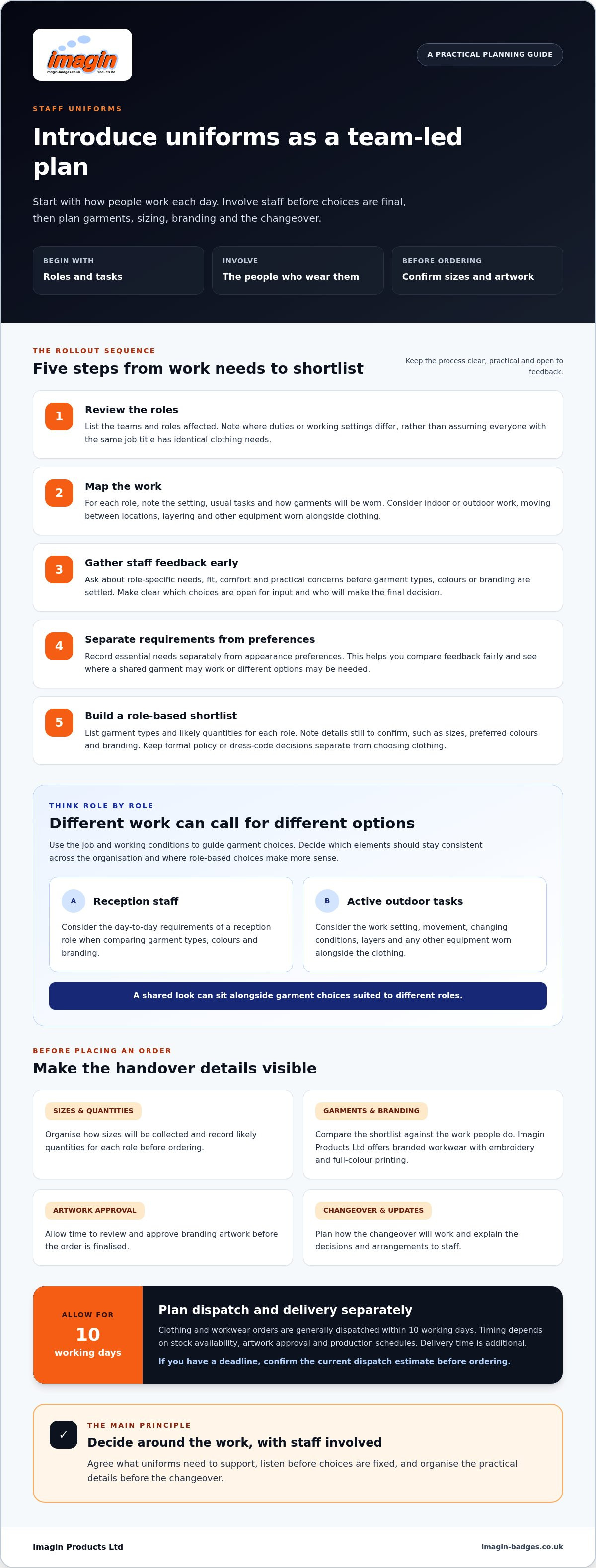
A useful rollout turns staff feedback and day-to-day requirements into a clear garment shortlist. Work through the steps in order, and keep drafting a formal uniform policy separate from deciding what clothing your teams need.
- 1. Review the roles. List the teams and roles affected, including differences in duties or work settings. Don’t assume that everyone with the same job title has identical clothing needs.
- 2. Map the work. For each role, note the setting, usual tasks and how garments will be worn. Consider whether staff work indoors or outdoors, move between settings, need layers or wear other equipment alongside their clothing.
- 3. Gather staff feedback. Ask about role-specific needs, fit preferences and practical concerns before settling on garment types, colours or branding. Use the same questions for each group so you can compare responses consistently. Explain which choices are open for input and who will make the final decision.
- 4. Separate needs from preferences. Record essential requirements separately from appearance preferences. This helps you weigh feedback fairly and see where a shared garment could work or different options may be needed.
- 5. Build a role-based shortlist. Note garment types and likely quantities for each role, along with details still to confirm, such as sizes, preferred colours or branding. Keep policy wording or dress-code decisions in a separate workstream.
How can managers gather useful staff input?
Keep questions specific to the work. Ask what staff need to do in their garments, whether they need room to move or layer clothing, and what fit or comfort considerations matter in their role. Invite feedback early enough for it to shape the shortlist, rather than asking for views after the main choices are fixed.
A manager or small coordinating team can collect responses, group similar points and record differing needs without assuming one person’s preference represents everyone. Make the decision process clear: staff input helps shape the choices, while the named manager or team confirms the final selection.
How should teams shortlist uniform requirements?
Use a separate list for each role or group, with garment types, estimated quantities and details still to confirm. Production, dispatch and delivery are separate stages, each affected by stock, artwork approval and order size, so contact our team directly for confirmed timeframes once you have a deadline. You can also browse our branded workwear collection as you develop the shortlist.
Match staff uniform garments and branding to each job
Choose garments around what each team does and where they work, rather than starting with one style for everyone. A role-based comparison helps you see where clothing can be shared and where different options are more practical.
Which uniform garments suit different roles?
| Role or setting | Garments to consider | What to assess |
|---|---|---|
| Customer-facing indoor roles | Polos or T-shirts | Whether the team needs a consistent appearance, and how the garment will be worn throughout the working day. |
| Active roles in changing conditions | T-shirts or polos with hoodies or jackets for layering | How often staff move between indoor and outdoor settings, and whether layers are practical for their tasks. |
| Food preparation or serving tasks | Aprons, alongside a suitable top, plus hair covering, disposable gloves and, where relevant, non-slip footwear | Hygiene and contamination control requirements for the task, ease of cleaning or replacement, and whether garments meet Food Standards Agency (FSA) hygiene expectations for the setting. |
| Outdoor or site-based roles | Jackets, with suitable base layers | Working conditions and any protective clothing requirements that apply to the role. |
| Hi-vis or safety-critical roles | Certified hi-vis garments, such as vests or jackets | The relevant garment standard and protection class for the task, confirmed against the manufacturer's documentation, with branding applied in a way that doesn't compromise visibility or certification. |
These are starting points, not fixed rules. A team doing different tasks may need more than one garment combination. Check how clothing will fit into the working routine, including whether staff need room to move, wear layers or use an apron over their usual top. If protective clothing is required, assess that separately and make sure any branding follows the garment manufacturer’s instructions.
Equality and accessibility in uniform selection
Uniform decisions should take account of equality law alongside practical requirements. Under the Equality Act 2010, employers must avoid discrimination in dress codes and uniform policies, including on grounds such as sex, disability, religion or belief. It's worth checking current guidance from GOV.UK or Acas when setting or reviewing uniform requirements.
Consider reasonable adjustments for disabled employees, such as alternative fastenings, adapted sizing or different fabric choices where standard garments aren't suitable. Where staff wear religious dress or items, such as headscarves or turbans, check whether the standard garment range can accommodate this alongside role requirements, for example around safety or hygiene. Building this into the shortlist stage, alongside role and task requirements, helps avoid decisions that unintentionally exclude or disadvantage staff.
Cost, maintenance and PPE responsibilities
Decide early who is responsible for purchasing, cleaning and replacing uniform items, and communicate this clearly to staff. Where employers require staff to buy or launder their own uniform, deductions or costs must not reduce pay below the National Minimum Wage; GOV.UK guidance on the minimum wage sets out how uniform-related costs and deductions are treated.
Regular branded workwear, such as polos or T-shirts, is different from Personal Protective Equipment (PPE). Where PPE is required for a role, such as certified hi-vis clothing for site-based work, the Health and Safety Executive (HSE) requires employers to provide it free of charge and to maintain or replace it as needed. Keep PPE decisions separate from general uniform choices, and check HSE guidance for the specific risks in your workplace.
How should you choose embroidery or full-colour printing?
Embroidery and full-colour printing are available for workwear. Neither is automatically right for every uniform. Consider the garment, artwork, design size and detail, number of colours, placement and finish you want. Embroidery adds texture, while full-colour printing allows colour to be used in the design. The suitable option depends on the artwork and garment.
Review the design at its intended size before deciding. Small lettering or fine detail may need particular attention, while a large design may not look right on every garment. If you’re introducing staff uniforms, shortlist the garment and branding method together so the finished appearance works as a whole.
Explore our embroidered and printed workwear collection as you compare options for your team, including certified hi-vis garments. Always check the specific garment's standard, protection class and manufacturer documentation before confirming branding placement, to ensure the finished item remains suitable for its intended use.
Introduce the new staff uniform with clear sizing and communication
A clear order process helps prevent avoidable corrections and gives staff a better idea of what to expect. Confirm the garments and branding first, collect sizes and quantities, approve the artwork, check the order details, then place the order and explain how distribution will work.
What information should you collect before ordering?
Use one team list to record each wearer’s selected garment, size and required quantity. If roles have different garment choices, make those distinctions clear so the order can be checked against the shortlist. Ask staff to use the sizing information for the relevant garment rather than assuming the same size will fit consistently across different styles.
Before approving the order, confirm the final logo version, garment colours, branding method and intended placement. Compare the order summary with the team list, checking role groups, garment selections, sizes and quantities. Resolve missing details before submission. A second check by someone who didn’t compile the list can help catch simple discrepancies.
How can managers make the changeover easier?
Tell staff why the uniform is being introduced, what is changing and what they need to do next. Explain how and when to provide size information, who will answer questions and how garments will be distributed once received. Give staff a clear way to raise concerns about fit or practical use, and say when they can expect an update.
Plan timing carefully. Production, dispatch and delivery are three separate stages, each affected by garment availability, personalisation method and order size. Contact our team directly for confirmed timeframes before setting a deadline, and don't treat dispatch as a guaranteed arrival date. Ask about rush order options if you're working to a tight deadline.
After distribution, set a point to gather feedback on fit and how the garments work during normal tasks. Record agreed adjustments, such as a role needing a different garment option, and keep the notes with the order details. This gives you a useful reference when planning future orders, rather than relying on memory.
Choose a staff uniform supplier and organise the next steps
A suitable supplier should make it straightforward to match garments and personalisation to your shortlist, confirm order details and understand timing. Before placing an order, check that you can get clear answers about the items your team has chosen, the artwork and what happens next.
What should you confirm with a workwear supplier?
Use this checklist to review the order before approval:
- Garments: Confirm the selected styles and colours suit the roles and tasks they’re intended for.
- Personalisation: Check whether embroidery or full-colour printing suits the specific garment and design.
- Artwork: Confirm the final logo version, placement and branding details before approval.
- Order details: Compare sizes and quantities with your team list, and resolve any missing information.
- Timing: Ask for current dispatch information and allow additional time for delivery.
Production, dispatch and delivery timescales depend on the garments, personalisation and quantities involved. Contact our team directly to confirm current timeframes before ordering, particularly if you're working to a deadline, and ask about rush order options if needed.
How can Imagin Products support a uniform order?
Our workwear range includes T-shirts, polos, hoodies, jackets, aprons and certified hi-vis safety wear, with embroidery or full-colour printing available. Pricing depends on the specific garments and order size, so contact our team to discuss tailored pricing for your requirements. You can compare options in our branded workwear collection, then check that your selected garments, artwork and quantities are ready to confirm.
Clear decisions made before ordering help keep the process organised, from confirming garment choices to planning distribution with your team.
Start your uniform rollout with a clear plan
Introducing staff uniforms is easier to organise when you begin with what each role needs, then involve staff before confirming garments and branding. A shortlist based on real tasks helps you compare suitable options without assuming one style will work for everyone.
Keep the order process clear, too. Check garment choices, sizes, quantities and artwork before approval, then tell staff what to expect and how to raise questions. These checks help your team understand the change and give you a useful record for future orders.
Imagin Products Ltd offers workwear with embroidery or full-colour printing, and our team can help you consider the options and confirm current pricing and timeframes for your order.
Start with your team's needs and build a practical uniform plan. Explore our branded workwear collection or contact our team to discuss your order.
Frequently Asked Questions
How do you introduce a new uniform to staff?
Explain why the uniform is changing, which garments are being considered and how staff can share practical feedback. Once the choices are confirmed, collect each wearer’s garment selection, size and required quantity, then approve the artwork and check the order details. Tell staff how distribution will work and who to contact with questions. After the changeover, gather feedback on fit and use, and note any adjustments for future orders.
Should employees be consulted before introducing staff uniforms?
Consulting staff before introducing uniforms is good practice rather than a strict legal requirement for general workwear, though it helps you identify role-specific needs and avoid avoidable pushback. Where a trade union or employee representatives are recognised in your workplace, it's sensible to involve them in the process, particularly for wider changes to dress requirements. Ask consistent questions about tasks, fit, comfort and layering so responses are easier to compare, and be clear about which choices are open for discussion and who will make the final decision. For guidance on consultation practice, see Acas.
What should a company consider when choosing staff uniforms?
Start with the work each role involves and the conditions in which garments will be worn. Consider the setting, movement required, layering needs and whether garments such as aprons are appropriate for particular tasks. Then compare garment styles and branding options against those requirements. Embroidery and full-colour printing are available for workwear, but the suitable method depends on the artwork, garment and intended appearance.
How do you collect uniform sizes from employees?
Ask each wearer to provide a size for every garment they need, using the sizing information for the chosen garment rather than relying on a general clothing size. Record the garment, size and quantity together in one team list. Give staff a clear response deadline, then check for missing details or entries that need clarification before ordering. Don’t assume someone’s size will be the same across different garment styles.
Can different teams have different staff uniforms?
Yes. Uniform choices can vary by team or role when people have different tasks, settings or layering needs. You might keep a consistent colour or logo across the organisation while selecting different garments for separate groups. For example, a team that uses aprons may need a different combination from colleagues who work outdoors and need layers. Base the distinction on practical requirements and confirm choices with affected staff.
How long does it take to order branded workwear?
Production, dispatch and delivery are separate stages, and timescales vary depending on the garments, personalisation method and order size. Contact Imagin Products directly before ordering to confirm current timeframes and discuss your required arrival date, particularly if you have a deadline. Ask about rush order options if you're working to a tight turnaround.

Article by
Team Imagin :)
Team Imagin helps businesses look their best with quality name badges, photo ID cards, lanyards and branded workwear. Based in Kirkcaldy, Scotland, we combine friendly, personal service with professional printing and embroidery to bring your branding to life. From small teams to large organisations across Scotland, the UK, Europe and America, we help you boost your brand and build connections.
Disclaimer
This article provides general guidance only. Information was correct to the best of our knowledge when published, but product details, prices and regulations may change. Check current specifications and official guidance before making decisions.