
How to Introduce a New Company Uniform: The Complete UK Rollout Guide

The most expensive uniform you'll ever buy isn't the one with the highest price tag; it's the one your employees refuse to wear. If you're feeling the pressure of an upcoming rebrand, you aren't alone. Many UK managers worry about staff complaining about comfort or style, whilst others feel overwhelmed by the logistics of a national rollout. Learning how to introduce a new company uniform effectively is the difference between a team that feels professional and one that feels frustrated. It's about more than just picking a colour. It's about building brand pride through quality craftsmanship and thoughtful design.
We know you want a transition that's both smooth and cost-effective. This guide provides the step-by-step process for a successful launch that ensures total employee buy-in. You'll learn how to navigate 2026 HMRC tax implications for branded workwear, manage wage deductions fairly, and select durable garments like embroidered hoodies or softshell jackets. We'll also show you how to complete the look with professional name badges and lanyards using our complimentary creative assistance. By the end, you'll have a clear roadmap to transform your brand image with confidence and ease.
Key Takeaways
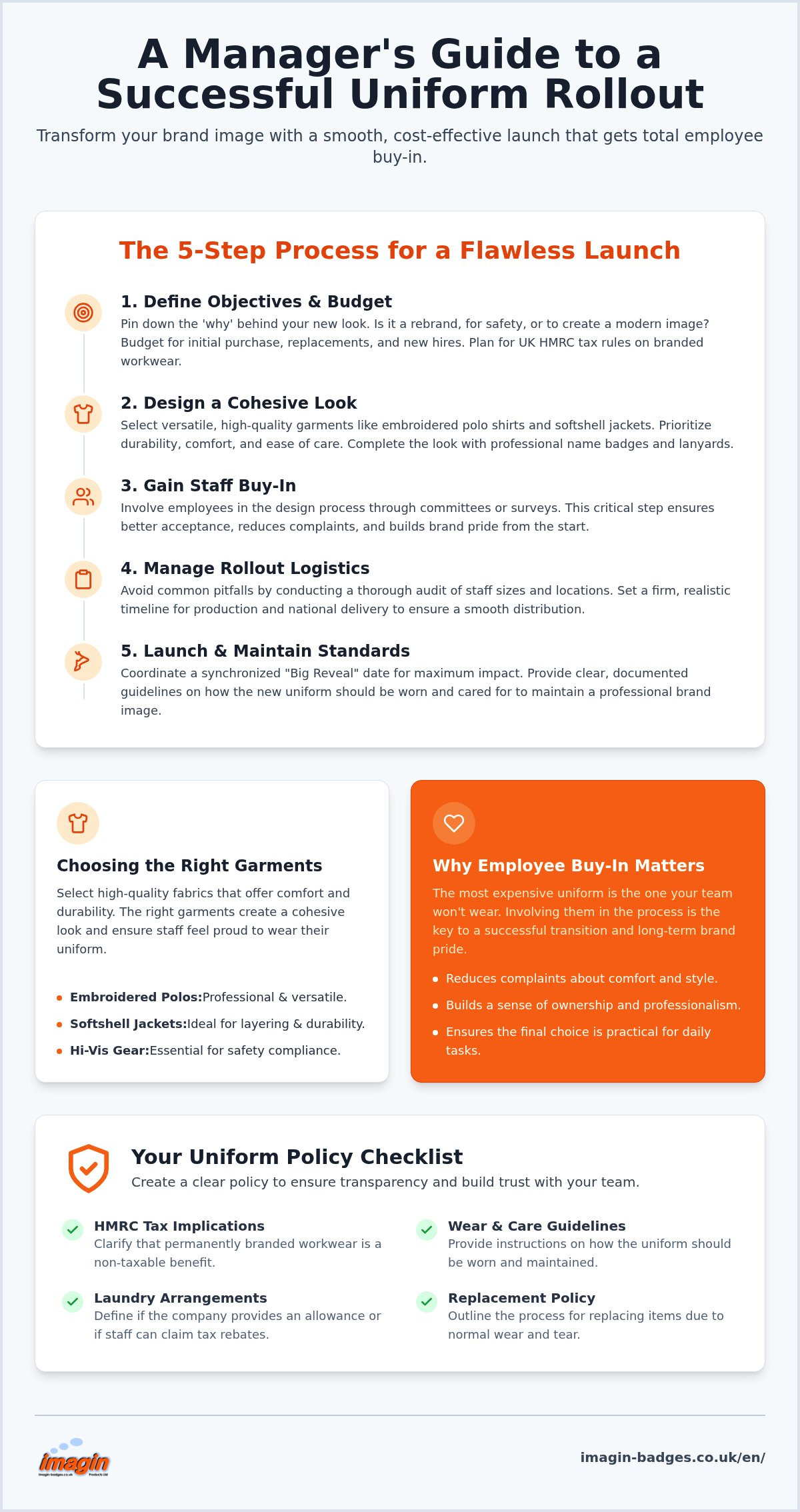
- Define your core objectives early to determine if your team needs a full kit or a strategic combination of branded tops and premium name badges.
- Select versatile, high-quality garments like embroidered polo shirts and softshell jackets that offer both comfort for staff and a cohesive look for the brand.
- Learn how to introduce a new company uniform by involving employees in the design process through committees, ensuring better buy-in and reducing complaints.
- Avoid logistical errors during a national rollout by conducting a thorough audit of staff sizes and setting a firm timeline for delivery.
- Ensure a professional transition by coordinating a synchronised "Big Reveal" date and providing clear guidelines on how the new uniform should be worn.
Defining the Objectives and Budget for Your Uniform Rollout
Before you look at fabric swatches, you need to pin down the "why" behind your new look. Are you rebranding to reflect a more modern image, or is this about meeting specific health and safety requirements? The role of uniforms in the workplace is multi-faceted; it serves as a powerful marketing tool whilst also being a functional necessity for staff safety. Understanding your primary driver helps you decide whether you need a full head-to-toe kit or a more targeted approach using branded workwear paired with premium name badges.
When you're planning how to introduce a new company uniform, consider the daily movements of your team. A retail environment might only require embroidered polo shirts, whereas a hospitality setting often demands more formal aprons or stain-resistant fabrics. If you're in construction or logistics, Hi-Vis safety gear is non-negotiable. Do your employees need breathable fabrics for physical labour, or sharp, wrinkle-resistant materials for front-of-house roles? Establishing these requirements early prevents costly mistakes later.
Budgeting involves more than just the initial purchase price. You must account for the cost of replacement items for general wear and tear, and ensure you have enough stock for future new starters. It's often more cost-effective to order a slightly larger initial volume to benefit from direct manufacturer pricing rather than placing small, frequent top-up orders that increase shipping costs and administrative time.
Setting Clear Brand and Safety Goals
Your uniform should act as a visual extension of your brand identity. Aligning garment colours with your corporate palette ensures instant recognition for customers. Beyond aesthetics, safety is paramount. In the UK, certain roles have strict legal requirements for protective clothing. A professional uniform should serve as a physical embodiment of your brand's commitment to quality and service. We provide complimentary creative assistance to ensure your logo placement is both visible and stylish, making the design process entirely stress-free.
Understanding UK Tax and Policy Implications
HMRC rules are quite specific regarding branded workwear. For a uniform to be a non-taxable benefit for the employee, it must be "distinctive" and permanently branded. This usually means a logo is embroidered or printed on the garment so it can't be worn as everyday clothing. You also need to decide if the company will provide a laundry allowance or if staff will handle cleaning themselves. Employees paying for their own maintenance can often claim a flat-rate tax rebate. Documenting these details in a clear staff uniform policy ensures transparency and builds immediate trust with your team.
Designing a Cohesive Look: Garments and Identification
A successful rollout depends on creating a system of clothing that works together. When you're deciding how to introduce a new company uniform, you must think beyond the single shirt. A cohesive look blends high-quality base layers with durable outerwear and professional identification. This ensures your team stays comfortable in all conditions whilst maintaining a sharp, unified appearance. According to research on customer perception of uniforms, the specific style of attire can significantly influence how customers perceive staff expertise and helpfulness.
Prioritising durability and ease of care is essential for long-term success. A uniform that looks great on day one but fades after three washes will quickly undermine your brand pride. We focus on premium materials and specialized production methods to ensure your investment lasts. By selecting fabrics that resist pilling and maintain their shape, you reduce the frequency of replacement orders and keep your team looking professional year-round.
Choosing the Right Branded Workwear
Selecting the right fabric is the foundation of employee comfort. When you're planning how to introduce a new company uniform, you'll find that whilst t-shirts are excellent for casual events, embroidered polo shirts offer a more structured, professional edge that suits most UK business environments. For modern offices or creative spaces, embroidered hoodies provide a contemporary feel that staff genuinely enjoy wearing. If your team works outdoors, you'll need to integrate fleeces or softshell jackets to provide seasonal consistency. For high-risk roles, hi-vis safety gear must meet specific UK safety classes whilst maintaining your branding.
Integrating Professional Name Badges and Photo IDs
Many businesses forget that a uniform is incomplete without clear identification. Integrating standard name badges for customer-facing staff breaks down barriers and encourages engagement. For larger organisations, implementing a photo ID badge system during the rollout adds a layer of security and helps staff feel like part of a verified team. When choosing badges, consider the fastening carefully. Magnetic backings are a popular choice as they protect the delicate fibres of your new garments from pinholes. You can explore our full range of badge options to find the perfect match for your new apparel. This attention to detail transforms a simple set of clothes into a comprehensive professional identity.
Gaining Staff Buy-in and Managing Feedback
Staff members often feel a sense of trepidation when they hear a change is coming to their daily workwear. They spend most of their week in these garments, so comfort and style are personal issues. Learning how to introduce a new company uniform successfully involves more than just selecting colours; it's about managing expectations and reducing anxiety through transparency. Introduce the concept early. By sharing your vision months before the launch, you allow the team to process the change and feel included in the journey from the start.
One of the most effective ways to ensure a smooth transition is to create a uniform committee. This group should include representatives from every department, from front-of-house staff to warehouse teams. These members act as a bridge between management and the wider workforce. They can provide vital insights into the practical needs of their specific roles, such as whether hi-vis safety gear requires extra ventilation or if embroidered polo shirts need longer hems for active tasks.
Don't forget to highlight the personal benefits for your employees. A high-quality uniform saves staff a significant amount of money on their own clothing. When you combine this with the fact that many UK employees can claim a flat-rate tax rebate for washing their branded gear, the financial incentive becomes a strong selling point. It's a practical way to show the team that the company is investing in their professional image whilst supporting their bank balance.
The Consultation and Trial Phase
Physical samples are your best tool for building excitement. Organise a feedback session where staff can actually feel the fabric quality and try on different sizes. We recommend distributing a range of embroidered hoodies and sweatshirts during this phase. Use simple surveys to gather honest opinions on fit and functionality. If the team reports that a sleeve is too tight or a fabric is too heavy for their environment, you can adjust the design before the final national rollout begins.
Addressing Common Employee Objections
Some staff may worry about losing their individuality or feeling like "corporate clones." You can address this by offering a range of approved items, such as a choice between a softshell jacket and a fleece. Inclusivity is non-negotiable. Ensure your policy accommodates all body types and religious requirements, such as providing branded headscarves where needed. Remind the team that wearing photo ID cards and professional badges isn't just about branding. It helps them feel more authoritative and safe in their roles, especially when dealing with the public.
Managing the Logistics of a National Rollout
Managing the logistical side of a national rollout requires a meticulous approach to ensure every site receives the correct items on time. When you're planning how to introduce a new company uniform, your first step should be creating a definitive timeline. This document should track every milestone, from the initial sample approval to the official launch date. It's often helpful to work backwards from your desired reveal date to ensure you've allowed enough time for production and internal distribution across your various UK locations.
Conducting a thorough audit of current staff numbers and sizes is the only way to prevent significant waste and unnecessary costs. Don't guess; ask every department head to provide a verified list of their team's specific requirements. You also need to establish a clear process for how replacement items and uniforms for new starters will be handled after the initial launch. Having a set procedure ensures your professional image doesn't dilute as the months pass and new team members join the business.
Sizing, Measuring, and Ordering
Relying on generic small, medium, and large labels often leads to frustration and a poor fit. Every manufacturer has slight variations in their patterns, so we provide a detailed size guide for every garment in our range. Providing this to your team reduces the risk of returns and ensures everyone feels comfortable from day one. To keep your budget manageable, consider ordering custom name badges in bulk. Ordering your identification and apparel from a single manufacturer simplifies the journey and ensures a perfect brand match across all items. Managers can track these requirements using a simple centralised spreadsheet to keep the rollout organised and transparent.
Quality Control and Distribution
Quality control is a critical step before any items leave for your sites. We inspect every batch of embroidery and printing to ensure your logo is rendered with absolute precision and vibrant colour. To make the rollout as easy as possible for your local managers, we can package uniforms into individual kits. Each kit might contain three embroidered polo shirts, one fleece, and a premium name badge. This pack-per-person approach eliminates confusion during distribution and makes staff feel valued. Finally, plan for the secure disposal or recycling of old branded uniforms to prevent unauthorised use and maintain your new brand's integrity. You can browse our branded workwear collections to start planning your national rollout today.
Launch Day and Maintaining Professional Standards
Launch day is the culmination of your hard work. It represents the moment your brand's new identity finally becomes a physical reality. To ensure the highest impact, you should set a "Big Reveal" date where every staff member across all your UK sites starts wearing the new uniform simultaneously. This synchronised approach creates a powerful visual statement for your customers and helps the team feel part of a significant company milestone. Understanding how to introduce a new company uniform effectively means treating the launch as an event rather than just a change of clothes. Celebrate the new look by taking a team photo or sharing the update on social media to build internal morale and external brand awareness.
Once the initial excitement has settled, it's vital to gather feedback. Check in with your team after the first week to address any unforeseen practical issues. Perhaps a specific role finds the softshell jackets too warm for their indoor tasks, or the placement of a pocket needs adjusting for the next order. This proactive attitude shows your staff that you value their comfort as much as the company's image. It also allows you to make minor tweaks before you place any large-scale replacement orders.
Communication and Presentation Standards
A high-quality uniform only looks professional if it's worn correctly. Provide every employee with a clear "Uniform Standards" guide that defines your expectations for cleanliness and garment condition. This document should illustrate how items should be layered and where identification should be placed. We recommend that standard name badges are always worn on the upper right or left chest for maximum visibility during customer interactions. A well-presented team wearing coordinated apparel and clear identification signals a high level of expertise and immediately builds trust with your clientele.
Care and Replacement Policy
The longevity of your investment depends on proper maintenance. Provide clear washing instructions to every staff member to prevent the fading of embroidered logos or damage to technical fabrics. It's helpful to implement a "fair wear and tear" replacement cycle, typically every 12 months, to ensure no one is wearing tatty or ill-fitting gear. Encourage staff to report lost or damaged photo ID cards or badges immediately. Because we manufacture our items in the UK, we can offer rapid turnarounds on small replacement orders to keep your team looking sharp. Maintaining these standards ensures that the professional image you've worked so hard to build remains consistent for years to come.
Ready to Launch Your New Brand Identity?
A successful rollout is about more than just a new set of clothes; it's a strategic move to unite your team and elevate your professional image. By involving your staff early through committees and ensuring your logistics are supported by accurate sizing audits, you'll avoid common pitfalls. Remember that a uniform is only complete when it's paired with professional identification that builds immediate trust with your customers. Mastering how to introduce a new company uniform requires a balance of clear communication and high-quality craftsmanship that stands the test of time.
We've been specialists in both identification and apparel since 1990. We offer complimentary creative assistance with every order to ensure your logo placement is perfect. Our UK-based manufacturing allows for rapid turnaround and national delivery, making us a dependable partner for your project. Explore our range of professional branded workwear and identification for your rollout today. With the right planning and a supportive partner by your side, your team will be wearing their new brand with pride in no time.
Frequently Asked Questions
How much notice should I give staff before introducing a new uniform?
You should aim to provide at least three to six months of notice when learning how to introduce a new company uniform. This timeframe allows for a thorough consultation phase, sizing sessions, and the production of samples. Giving early notice reduces staff anxiety and ensures that the transition feels like a collaborative process rather than a sudden change. It also gives you ample time to coordinate with your manufacturer for a synchronised national rollout across all your sites.
Can I legally force employees to wear a new company uniform in the UK?
Yes, UK employers can legally require staff to wear a uniform if it's stated in the employment contract. However, your policy must comply with the Equality Act 2010. This means you must make reasonable adjustments for employees with disabilities and ensure the code doesn't discriminate based on religion or belief. It's best practice to apply equivalent standards to all staff members to maintain fairness and avoid potential legal disputes during the rollout process.
Who should pay for the new company uniform and its maintenance?
Employers aren't legally required to pay for uniforms unless they are Personal Protective Equipment (PPE). However, most UK businesses provide the initial kit for free to ensure brand consistency. If you choose to deduct costs from wages, the employee's pay mustn't fall below the National Living Wage, which is £12.71 per hour for those aged 21 and over as of April 2026. Employees can often claim a flat-rate tax rebate from HMRC for washing branded items.
How many sets of uniforms should I provide for each employee?
A standard weekly kit for a full-time employee typically includes five embroidered polo shirts or t-shirts, two sweatshirts or hoodies, and one outer jacket. This ensures staff have a clean garment for every shift without needing to wash items daily. For part-time staff, you can scale this down proportionally. Providing a complete set reduces wear and tear on individual items, extending the overall life of the uniform and keeping the team looking professional.
What happens if a staff member refuses to wear the new uniform?
If a staff member refuses to wear the uniform, you should first investigate their reasons. There may be a valid concern regarding comfort, fit, or a protected characteristic under the Equality Act. If the refusal is purely a matter of personal preference and the requirement is clearly stated in their contract, you can follow your standard disciplinary procedures. Open communication and early consultation usually prevent these issues from arising by ensuring the garments are practical and comfortable.
How do I choose the best logo placement for my branded workwear?
The most effective logo placement for branded workwear is usually the left chest, as this is the natural line of sight during a greeting. For maximum brand impact, you might also consider a larger print on the back of jackets or sweatshirts. We provide complimentary creative assistance to help you visualise these options. Our experts can guide you on the best size and position for your logo to ensure it looks professional and remains visible when staff are wearing lanyards or name badges.
Should I use embroidered or printed logos for my staff uniforms?
We generally recommend embroidered logos for a premium, durable finish that withstands frequent washing. Embroidery is ideal for polo shirts and fleeces as it adds a textured, high-quality feel. For very intricate designs or large graphics on thin t-shirts, digital printing may be more suitable. To qualify for HMRC tax relief, the branding must be permanent and distinctive. This ensures the garment is clearly workwear and cannot be mistaken for ordinary clothing outside of the workplace.
How can I ensure my new uniform rollout is inclusive for all staff?
Inclusivity starts with a diverse range of sizes and fits for all body types. Ensure your policy allows for religious dress, such as providing branded headscarves, and offer maternity-specific items where required. When you're planning how to introduce a new company uniform, involve a "uniform committee" with representatives from different backgrounds. This helps you identify potential issues early, such as fabric sensitivities or the need for specific fastenings on professional name badges.